What Flowers Symbolize Healing (and How to Choose One)
You’re standing in the grocery store flower cooler with fifteen minutes before visiting hours end, and every bucket looks the same: carnations, a few sad roses, something yellow you can’t name. Someone you love just had surgery, or lost someone, or is having the kind of week that makes flowers feel necessary, and you have no idea what you’re actually supposed to grab. You just know a candy bar won’t cut it.
Here’s the short answer: gerbera daisies, sunflowers, rosemary, and gladiolus are the flowers people reach for most often when they want to say “get well” or “get through this.” Handing over one of them says something you might not have the words for otherwise. That message is the entire point of the gift.
Where the idea of “healing flowers” comes from
People have been assigning meaning to flowers for a long time, but the version most of us actually use, roses for love, lilies for peace, daisies for cheer, mostly comes from the Victorians. They called it floriography, the language of flowers, and it worked as a kind of code: you could say things with a bouquet that you weren’t supposed to say out loud. A lot of that code has faded, but the “healing flower” idea stuck around because it’s useful. When you don’t know what to say to someone in a hospital bed, a flower says it for you.
That’s also the boundary worth being honest about. A flower carries a wish for someone’s recovery, and that’s the limit of what it does. Keep that distinction in your back pocket as you read the rest of this, because it’s the difference between a genuinely lovely gift and one that accidentally overpromises.
Rosemary is the classic answer
If you only remember one plant from this whole list, make it rosemary. It’s the traditional flower (well, herb, but it shows up in every bouquet guide) for healing and remembrance, and the association is centuries old. Shakespeare put the line in Ophelia’s mouth: “There’s rosemary, that’s for remembrance.” Greek and Roman mourners wore it. Brides tucked it into wedding wreaths for the same reason people still write “in loving memory”: because rosemary was believed to hold memory in place.
Handing someone a sprig of rosemary sends a specific message: I remember, I’m thinking of you, I haven’t forgotten. That message is why rosemary has stayed part of hospital and funeral bouquets for centuries. A few stems tucked into an otherwise ordinary bouquet turns a nice gift into one with a little weight behind it, and it costs you nothing extra at the store.
Flowers people reach for during physical recovery
These are the ones that show up again and again in “get well soon” bouquets, and each one earned that spot through long tradition.
- Gerbera daisies: the default cheerful flower, chosen for what their bright, simple shape has come to represent: good spirits and a friendly wish for a fast recovery. They’re inexpensive, they last seven to ten days in water, and they read as warm without being fussy.
- Sunflowers: stand for adoration and loyalty, which is why they’re such a common choice when you want a bouquet to say “I’m in your corner” rather than something softer or more formal. One big stem fills a vase on its own, and at $3 to $5 apiece from a grocery store, they’re one of the best-looking options for the money on this list.
- Yellow roses: historically the color for friendship rather than romance, which makes them one of the few roses you can send to a coworker or a friend’s parent without anyone reading it the wrong way. They hold up close to a week in water, about the same as any grocery-store rose, and cost about the same too.
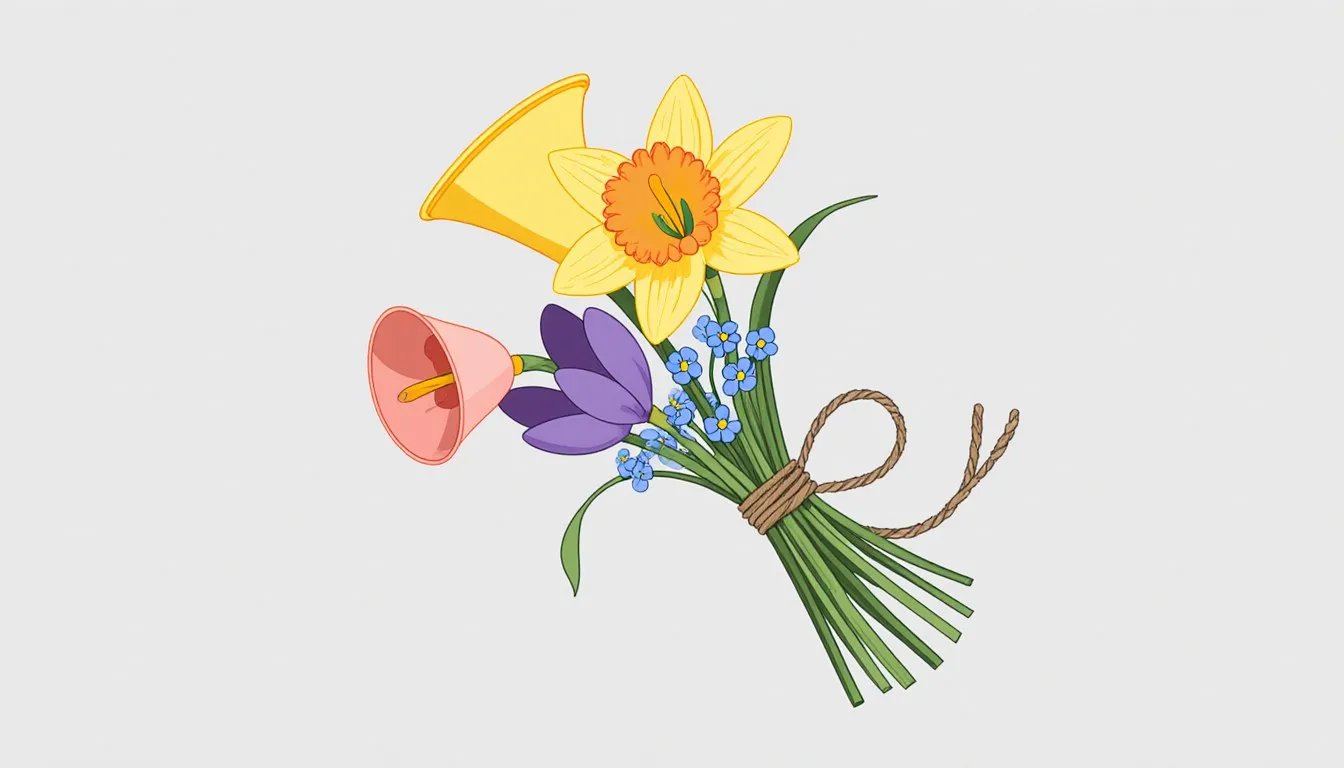
- Daffodils: tied to new beginnings, largely because they’re some of the first flowers up after winter. Sending them to someone mid-recovery is a way of saying the hard part is behind you. They’re cheap while they’re in season, late winter into spring, but they fade fast, often within five or six days, and you won’t find them at all the rest of the year.
- Carnations, especially pink ones: carry a long tradition as a mother’s flower and a gratitude flower, which is part of why they show up so often in hospital gift shops. They’re also just sturdy, budget-friendly, and available basically everywhere, which matters when you’re buying flowers on the way to visiting hours.
If you’re standing in the store with two minutes to decide, grab the gerbera daisies or the carnations. They’re the cheapest of the five, they last the longest, and showing up with them beats showing up empty-handed while you deliberate over sunflowers versus daffodils.
Flowers for grief and emotional healing
Grief flowers work a little differently. Their job is to sit with someone in something that doesn’t get fixed on a timeline. White lilies are the most traditional choice here, standing in for peace and the restored innocence of a soul at rest, which is part of why they’ve become the default at Western funerals. White roses carry a similar note of reverence and remembrance. Chrysanthemums show up constantly too, though where you are matters a lot for that one, more on that in a minute.
If you’re picking flowers for someone in grief rather than in recovery, the etiquette leans a bit more formal and a bit more restrained: fewer bright, cheerful colors, more whites and soft pastels, and a card that says something specific about the person rather than a generic sympathy line. You don’t need to spend a lot. A modest bunch with a note that actually names what you loved about the person means more than an expensive arrangement with a card that could’ve gone to anyone.
Which flowers symbolize strength and resilience?
Some flowers are chosen less for comfort and more for grit. Gladiolus is the classic one, and the name gives it away: it comes from the Latin word for sword, after the plant’s tall, blade-shaped leaves. It’s carried the symbolism of strength and moral integrity since Roman times.
Reach for gladiolus instead of a grocery-store bunch when the person you’re buying for is in it for the long haul: chemo, physical therapy, a slow recovery with no clear end date. A single stalk is dramatic on its own, so five stems is plenty for a full arrangement. Budget $15 to $25 for that many at a florist, more than a grocery bunch but well under a full custom arrangement.
Protea is the other one worth knowing. It’s a shaggy, almost prehistoric-looking bloom from South Africa, part of the fynbos plant life that depends on wildfire to regenerate, which is part of why it’s come to stand for transformation and courage. It’s pricier and harder to find than gladiolus, often $8 to $12 a stem, so one or two protea mixed into a cheaper bouquet reads as a real gesture without the bill of an all-protea arrangement. Neither flower is common at the grocery store, so either one signals that you put real thought into the gift instead of grabbing whatever was closest to the door.
What the color adds
Color does its own work on top of whatever flower you picked, and it’s worth a beat of thought once you’re standing there deciding what to grab.
White reads as peace, which is why it’s the default you’ll see in a hospital room or a sympathy arrangement, it’s the color you can’t really get wrong. Yellow reads as friendship, so it’s the one to reach for when you’re buying for a coworker or a friend’s parent rather than a partner (nobody wants an office gift mistaken for a confession). Red reads as romance: gorgeous on a nightstand at home, the wrong note entirely for a hospital room.
If you’re not sure, go soft: white, pale pink, pale yellow, cream. Save the bold reds and deep purples for occasions that call for drama instead of comfort. Soft-color bunches also tend to run a couple dollars cheaper than the deep jewel tones at most grocery stores, so the safe choice and the budget choice usually end up being the same one.
Putting together a bouquet that actually says something
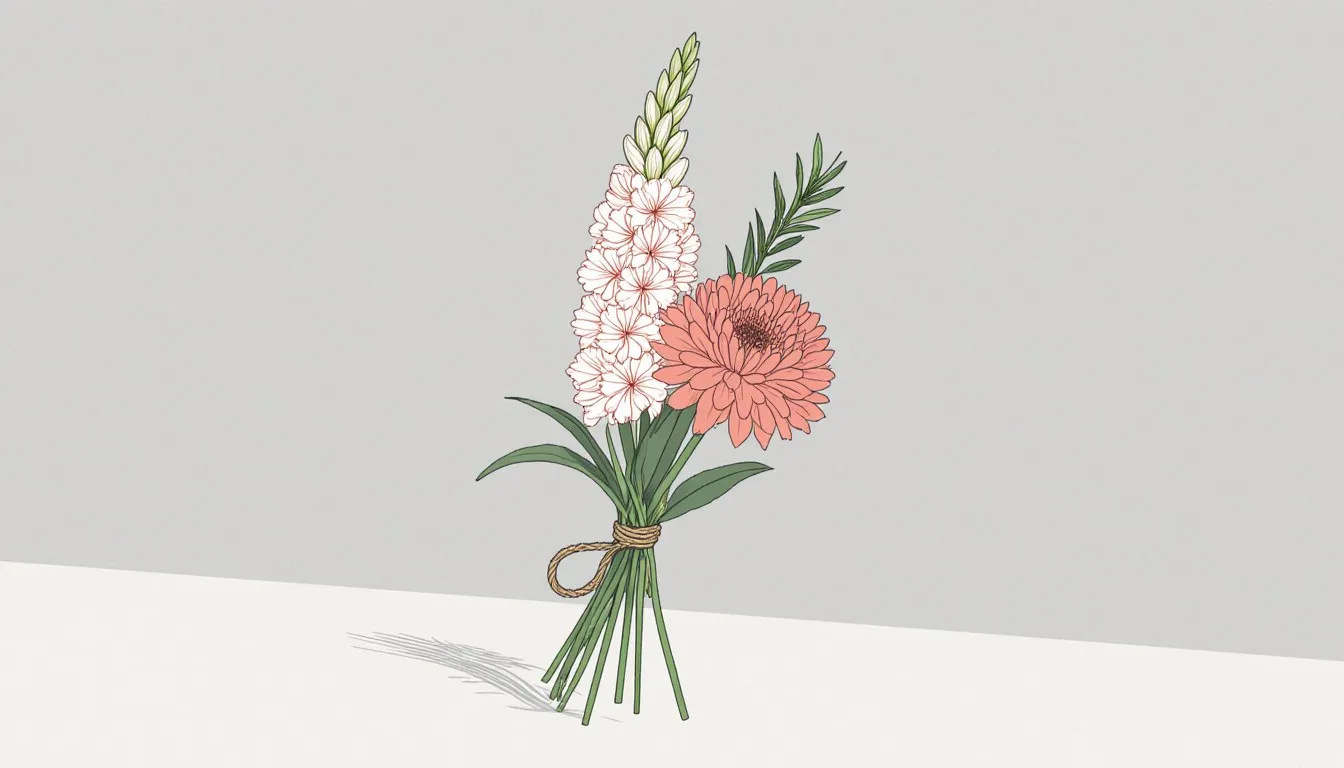
You don’t need a florist’s vocabulary to do this well. Pick one flower for the main message (rosemary for remembrance, sunflowers for loyalty, gerbera for cheer), then fill in around it with something that just looks nice and matches the color you landed on. Three to five stems of your “message” flower is plenty; you’re not building a wedding arrangement.
On cost: a grocery store bunch of gerbera daisies or carnations runs cheap, genuinely one of the least expensive ways to show up for someone. A full florist arrangement with rosemary, gladiolus, and roses worked in gets into real money fast, especially with same-day delivery tacked on. Neither option is the “right” one. A five-dollar bunch handed over in person often means more than a fifty-dollar arrangement that shows up by courier while you’re not there, so don’t let budget talk you out of showing up with flowers at all.
What to avoid, especially at a hospital
A few practical things trip people up here, and they’re worth checking before you buy:
- Strong scent: many hospitals restrict heavily fragrant flowers like lilies in shared rooms and certain wards, since strong scent can be genuinely unpleasant for someone already nauseated. Call the nurses’ station first if you’re unsure; it’s standard hospital policy in a lot of places, not a hard universal rule.
- Immunocompromised or ICU wards: many hospitals don’t allow live plants or flowers at all in these units, again as a matter of hospital policy rather than something you can judge from outside. A card, a balloon, or a small stuffed animal is usually the safer bet, and a quick call to the floor will tell you for certain.
- Pollen and allergies: stargazer and oriental lilies shed pollen from their anthers that stains everything it touches, including hospital linens. If you’re not sure, ask the florist for a low-pollen arrangement, or choose something like carnations or gerbera that don’t shed much at all.
- Anything with soil attached: hospitals that restrict live plants usually cite soil-borne bacteria as the reason, so a potted plant is the thing most likely to get turned away at the desk. Cut flowers in a vase are almost always the safer choice.
The same flower can mean the opposite thing somewhere else
Say you’re sending flowers to a grandmother in Italy, or shipping a bouquet to a friend getting married in Greece. You don’t have to guess on rosemary: across much of the Mediterranean, and in Western funeral and wedding traditions generally, it carries the same double meaning either way, love that keeps going and grief that hasn’t finished. Tuck a few stems into either box and nobody will read it as the wrong gesture.
Chrysanthemums split a different way. In the United States, a bright potted mum is a cheerful, casual gift, the kind of thing you’d bring to a fall dinner party or set on a porch. In Japan, the chrysanthemum is the imperial family’s symbol and appears at formal, respectful occasions, including funerals. In France, Italy, Spain, and several other European countries, chrysanthemums are specifically and almost exclusively a funeral flower, reserved for gravesites and All Saints’ Day, and giving them as a casual gift would land as a genuine mistake. Same flower, three different rooms it belongs in. Worth a thirty-second check if you’re sending flowers to someone outside your own country.
One thing to actually do
You don’t need to memorize any of this. Next time you’re stuck in front of a flower cooler with fifteen minutes on the clock, just ask yourself one question: what do I want this bouquet to say? Pick the flower that answers that, whether it’s rosemary for “I remember,” sunflowers for “I’ve got you,” or a plain bunch of gerbera daisies for “I just wanted you to smile today.” That’s the whole system. Everything else in this piece is just vocabulary for a feeling you already have.
This is general wellness information, not medical advice. Talk to a healthcare professional about your specific situation.
Maya Ellison
Staff Writer
Maya Ellison writes about living a little better on an ordinary budget and an ordinary schedule: the small, doable changes that actually stick. She is a fan of the 20-minute version of everything and deeply suspicious of any wellness plan that requires a spare $400.