Flower Meanings by Color: What to Grab and Why
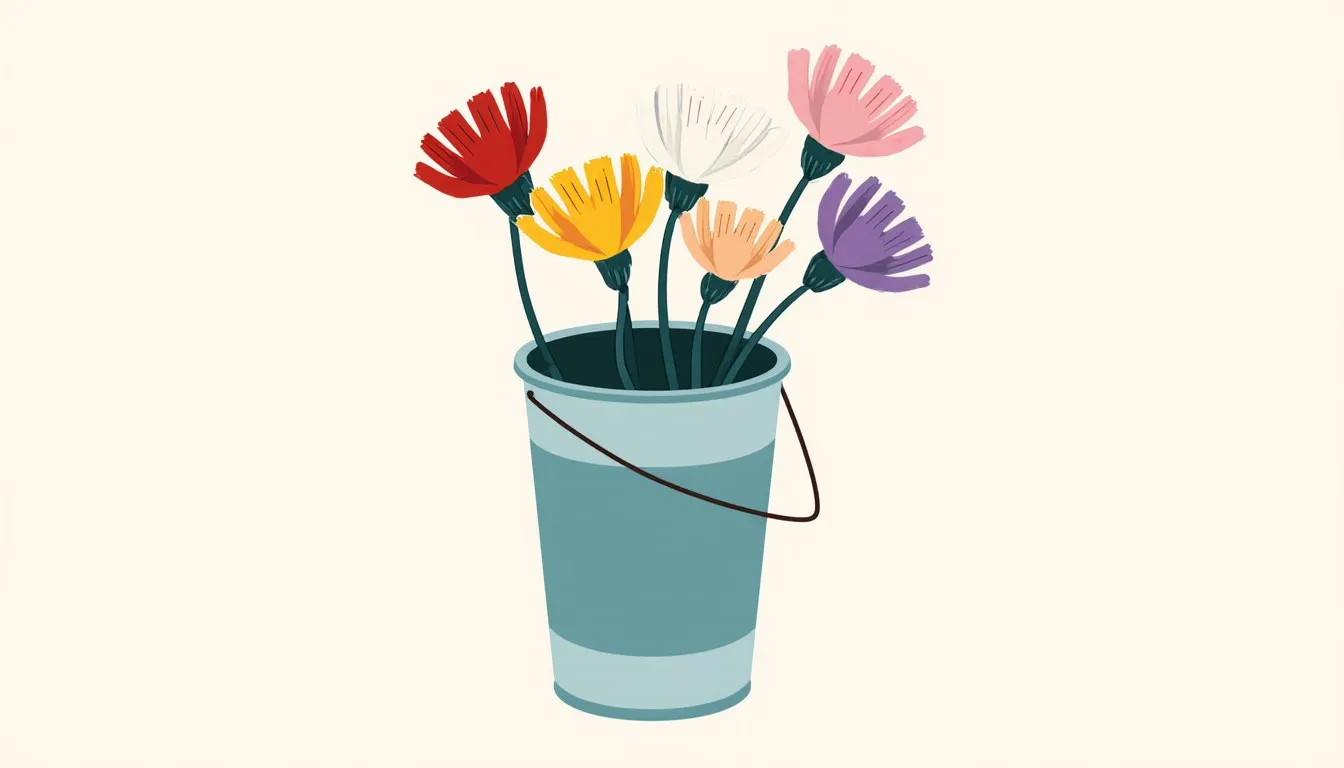
Stand in front of a flower bucket for more than ten seconds and you’ll feel it: the color is doing most of the talking before you’ve even looked at what kind of flower it is. Red says one thing, yellow says something completely different, and grabbing the wrong one can turn “just because” into “wait, are we breaking up?” The short answer is that color carries the bulk of a bouquet’s emotional signal, red for passion and deep feeling, pink for gratitude and softness, white for purity and new starts, yellow for friendship and cheer, purple for admiration, and so on, and once you’ve settled on the color that matches your moment, the specific flower is just detail work.
I did not know any of this the first time I stood at a shop counter trying to decide between a bunch of yellow tulips and a bunch of white ones for a coworker’s last day. I grabbed yellow on instinct and it turned out to be exactly right, cheerful, not romantic, not funeral-adjacent, just “hey, we’ll miss you, good luck.” That’s really what this guide is: a way to think through what you’re actually trying to say before you pick up a single stem.
Why does flower color even matter that much?
Because color reads faster than species does. Most people can’t tell a ranunculus from a peony at ten paces, but everyone clocks red versus white versus yellow instantly, and their brain assigns a feeling to it before they’ve consciously registered a single petal shape. That’s the whole trick behind flower symbolism: it’s a shorthand, built up over centuries, for saying something you might not have the words for.
A lot of that shorthand traces back to Victorian floriography, the parlor game of assigning precise meanings to flowers and colors so that a bouquet could carry a coded message when saying the thing outright wasn’t polite. Some of those meanings have softened or shifted since, but the bones are still there, and they still shape what people expect when a bouquet shows up. If you want the full spectrum of flower meanings and symbolism beyond just color, that’s worth a look too. Here, I want to stay narrow: color first, species second, because that’s the order most people actually shop in.
What does red actually say?
Red is passion, first, loudest, the color behind a dozen roses on an anniversary and just as easily the color behind a retirement-party arrangement that has nothing to do with romance at all. Deep red carries respect, courage, and strong feeling of the non-romantic kind, which is why you’ll see it at milestone anniversaries and long-service send-offs as often as anything meant for a partner.
My personal rule: I reach for red when the feeling is big and I’m not worried about it being misread, an anniversary, a genuine “I’m crazy about you,” a grand gesture. I skip it for a first date. Red on a first date is a lot, it tells the other person you’ve already decided how serious this is, and most first dates haven’t earned that yet. Pink does that job better, and I’ll get to why in a second.
What does pink mean on a flower?
Pink is where florists land for gratitude, admiration, and gentleness, all the warmth of red with the intensity turned down. It’s the color I send for “thank you” more than any other, because it reads as genuinely appreciative without implying anything romantic, which makes it safe for a coworker, a teacher, a friend who covered your shift.
It’s also my go-to for new-baby arrangements. Pale pink in particular carries a softness that feels right for a nursery or a hospital room in a way that red, with all its intensity, doesn’t. And it’s a solid first-date pick, warm enough to say you’re interested, restrained enough not to spook anyone.
What does white symbolize?
White has long stood for purity, innocence, and new beginnings, which is why it dominates weddings and christenings and any occasion built around a fresh start. It also reads as remembrance in some settings, but I’m not going to dwell on that angle here since sympathy flowers deserve their own careful treatment. If that’s specifically what you’re shopping for, the deeper guide to flower meanings and death covers that ground properly.
What I will say: white is the safest color in the entire bucket. It’s elegant, it doesn’t overcommit emotionally the way red does, and it works for congratulations, get-wells, housewarmings, and “I don’t know this person that well but I want to send something nice” moments. When in doubt, white rarely feels wrong. It can feel a little formal, though, so if you want something that feels warmer and more personal, it’s not always my first pick for a close friend.
What does yellow say about friendship and joy?
Yellow gets read as cheerfulness, friendship, and encouragement, and it’s the color I’d bet on for a get-well arrangement or a “congrats on the new job” bouquet before any other. It’s bright without being intense, and it doesn’t carry any romantic weight at all, which makes it one of the easiest colors to send without a second thought.
There’s one caveat worth knowing: yellow roses specifically carry an old superstition about jealousy and infidelity, a holdover from Victorian-era flower codes that still lingers in some corners of flower lore. It’s mostly forgotten now, and I wouldn’t let it stop you from sending yellow roses to a friend, but if you’re sending flowers to a romantic partner, it’s worth knowing the association exists in case they’ve heard it too. Curious about the color on its own terms rather than through the rose specifically? What does a yellow flower symbolize gets into that in more depth.
What does orange mean in a bouquet?
Orange is enthusiasm, energy, and warmth, the color of genuine excitement rather than quiet appreciation. It’s my pick for congratulations, especially the kind tied to a real milestone, a promotion, a graduation, a first day in a new place, because it has a burst of energy that pink and white don’t quite carry.
Orange is also, in my opinion, the most underused color in the whole bucket. People default to red or yellow and skip right past it, but a bunch of orange ranunculus or marigolds stands out precisely because almost nobody else is sending it. If you want to celebrate someone in a way that feels a little different from the usual script, orange is where I’d point you.
What does purple symbolize?
Purple means admiration, dignity, and historically, royalty, going back to a time when purple dye was rare and expensive enough that only the wealthy could afford to wear it. Some of that old association with enchantment and success has carried into how we use purple flowers today.
This is my color for “I’m impressed by you” occasions: graduations, promotions, awards, any moment where the message is less about affection and more about respect for what someone accomplished. Deep purple in particular feels a notch more formal than lavender or lilac shades, so I’ll go paler for a casual congratulations and deeper for something that calls for a bit more gravity.
What does blue mean, and is it even natural?
Blue means calm, trust, and rarity, the kind of color that stands out because it’s genuinely uncommon in nature. True blue is one of the hardest colors to find in nature; most of the vivid blue flowers you see in a shop bucket, especially blue roses, are dyed rather than naturally that color, since roses don’t produce the pigment needed for true blue on their own. A handful of flowers, like certain hydrangeas and delphiniums, do occur naturally in blue, and those are the ones I point people toward when someone wants the real thing. My honest take: if a blue bouquet in a shop bucket looks that saturated, it’s almost certainly dyed, roses especially, and that’s fine by me, it still reads as calm and a little unexpected, which is usually the whole point of sending it.
That rarity is part of why blue reads the way it does: sending it feels a little like sending something uncommon, which lines up with meanings like wonder and unattainable love that have attached to it over time. If you’re curious specifically about the dyed-versus-natural question and what it means when it’s a rose, what does a blue rose symbolize walks through that in detail. For everyday shopping purposes, just know that a blue bouquet is going to stand out, and that’s usually the point.
What does a green or peach flower add to the mix?
Green and peach rarely headline a bouquet, but they’re doing quiet work when they show up as accents. Green symbolizes renewal, luck, and life, which is part of why you’ll see it worked into arrangements for new jobs, new homes, or anything tied to a fresh chapter. It also just makes everything else in the bunch look more alive, greenery is the difference between a bouquet that reads “arranged” and one that reads “thrown together.”
Peach carries a softer version of pink’s gratitude and sincerity, with a bit more warmth mixed in. I like it for occasions that sit between “thank you” and “I appreciate you deeply,” a gift for a friend who did something genuinely generous, or a thank-you that feels like it needs a touch more warmth than plain pink offers. Neither color needs to be the star. A few sprigs of green or a handful of peach ranunculus mixed into a red or white bouquet rounds out the whole thing without changing what it’s saying.
How do I actually choose a color for the occasion I’m shopping for?
Start with the feeling, not the flower. Ask yourself what you actually want the person to understand when they open the box, then match the color to that, and let the species be whatever’s freshest or prettiest that day.
- Apology: white or soft pink. You want humility and warmth, not the intensity of red, which can read as trying to sweep something under the rug with romance.
- New baby: pale pink, soft yellow, or white. Gentle, celebratory, nothing too bold for a room full of exhausted new parents.
- Sympathy-adjacent, but not a funeral: white or pale purple, something that reads calm and respectful without the full weight of formal remembrance. For an actual sympathy arrangement, that’s its own guide.
- First date: pink, or a mix of pink and white. Warm, low-pressure, doesn’t announce more than you mean to.
- Just because: honestly, whatever color made you stop at the bucket. Yellow and orange are my favorites for this one because they don’t carry any weighty expectation.
Beyond color, what pushes an arrangement toward formal or casual is mostly stem count and structure. A tight, single-color bunch of a dozen long-stemmed roses reads formal no matter what, and it’s also the priciest way to make that point, a grocery-store bunch, trimmed and re-tied at home, reads better than people give it credit for and costs a fraction as much. A loose, mixed-color gathering with plenty of greenery and a few wildflower-looking stems reads casual and personal, even with the exact same colors in it. If you’re not sure how formal to go, casual and a little wild is almost always the safer, warmer read.
Can I mix colors, or should I stick to one?
You can absolutely mix colors, and honestly, most of the bouquets I’ve loved receiving were mixed. A red-and-white bouquet reads as passion with a bit of respect behind it, and a pink-and-yellow one reads as warmth plus genuine friendship, each color adding its own note instead of blurring into one.
The simplest rule of thumb: pick one color to carry the main message and let a second color support it in a smaller quantity. If red is your main statement, a little white keeps it from feeling like too much. If yellow is doing the friendship work, a touch of orange adds energy without competing. I’d stop at two, maybe three colors for anything you’re giving as a gift, past that it starts to feel more like a garden than a message. And if you’re ever unsure, screenshot this section before you head to the shop. Standing at the bucket trying to remember what peach means is exactly the moment this guide is for.
Maya Ellison
Staff Writer
Maya Ellison writes about living a little better on an ordinary budget and an ordinary schedule: the small, doable changes that actually stick. She is a fan of the 20-minute version of everything and deeply suspicious of any wellness plan that requires a spare $400.