What a Lily Tattoo Actually Means, By Type and Color
You’ve been scrolling tattoo inspo for forty-five minutes, you’ve saved eleven screenshots, and somehow six of them are lilies. That’s not an accident. A lily tattoo, at its simplest, reads as purity, rebirth, or devotion, the same three ideas that have followed this flower since before anyone was tattooing them. But which of those three it says on you depends on which lily you picked and what color it’s inked in, and that’s the part most people don’t think about until they’re already in the chair. If you want the fuller symbolic backstory, the deep dive on lily flower meaning covers where all of this comes from. Here we’re talking about what happens once it’s permanent.
What does a lily tattoo actually mean?
The short version: purity, new beginnings, and devotion, with a strong secondary association with mourning and remembrance. That’s a wide range for one flower, and it’s exactly why the lily shows up on so many different people for so many different reasons. Someone getting a lily for a fresh start after a rough year is drawing on the same symbol as someone getting one for a grandmother who’s gone.
Some of that flexibility traces back a long way. The lily’s association with motherhood and rebirth is often traced to Greek mythology, where the flower is tied to Hera, and the story usually told is that its link to purity was popularized by the Victorian language of flowers, when people sent bouquets that said things they weren’t allowed to say out loud. A tattoo works the same way now. It’s a private message you’re wearing where other people can see it, or can’t, depending on where you put it.
Does it matter which lily you pick, white, tiger, calla, or stargazer?
It matters more than most people realize walking into a consult. White, tiger, calla, and stargazer are four different flowers that carry four different meanings. Here’s how they tend to split:
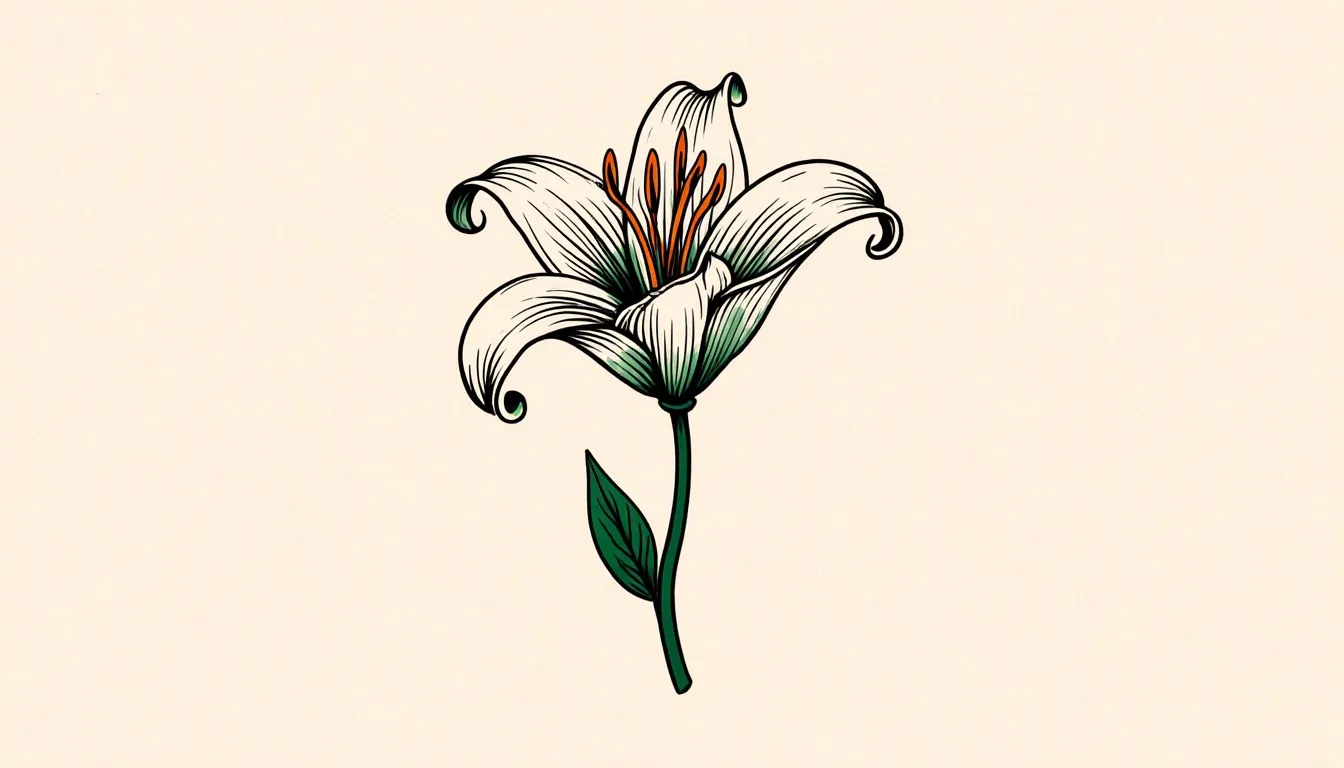
- White lily (often the Easter lily): purity and innocence. This is the one people mean when they say “classic lily tattoo,” and it’s the most common choice for a milestone, a recovery, a fresh start, a christening or first communion memory.
- Tiger lily: confidence and wealth. It’s bolder-looking too, those freckled orange petals read as more assertive on skin than a plain white bloom, which is part of why people who want a lily but not a delicate one gravitate here.
- Calla lily: elegance, beauty, and rebirth, with a strong showing at weddings historically. Worth knowing before you commit to the name: a calla lily isn’t botanically a true lily at all, it’s in a different genus (Zantedeschia) entirely. Tattoo shorthand doesn’t care about the botany, but if you’re the type who wants your ink to be technically accurate, it’s a fun fact to have ready when someone asks.
- Stargazer lily: ambition and achievement, sometimes read as celebration or accomplishment. Its bright pink, upward-facing bloom is the reason people pick it for “I did the thing” tattoos, a graduation, a sobriety milestone, a career win.
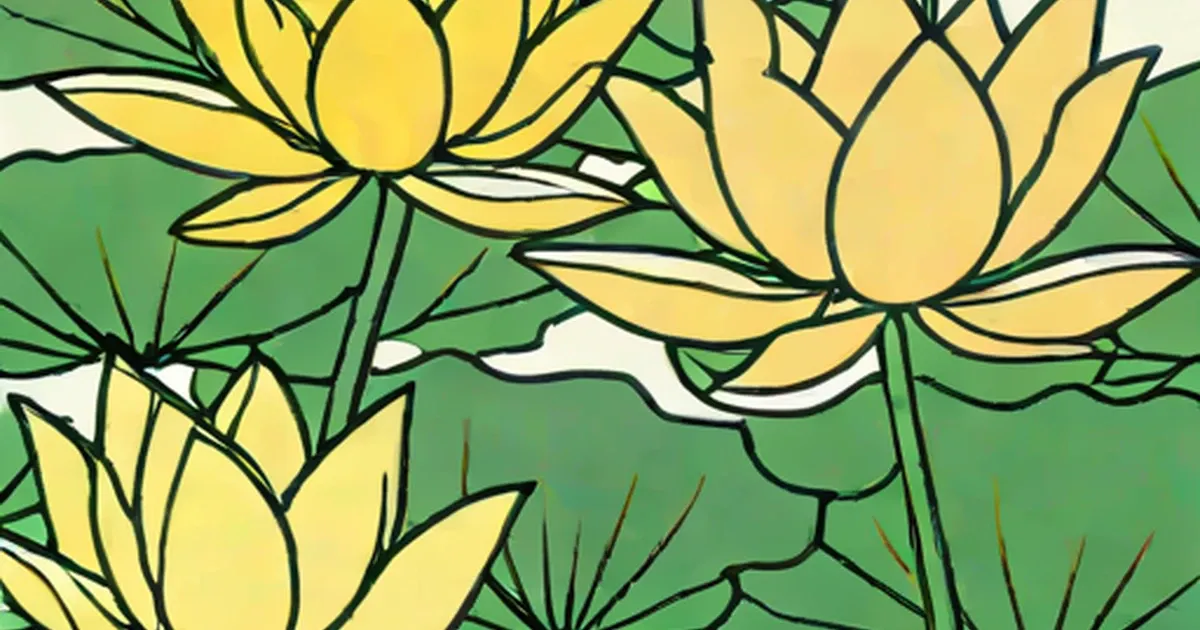
There’s also the water lily, which floats in its own symbolic lane closer to serenity and enlightenment than the upright garden lilies above, and it tends to get tattooed in a very different visual style. If a water lily is what you’re picturing, know you’re borrowing from a different tradition than the stemmed lily varieties here.
My honest take, having watched a lot of friends go through this decision: pick the lily whose actual look you’d want on your arm forever before you pick it for the meaning. A meaning you have to explain every time someone asks isn’t doing its job as well as one that’s obvious from the flower itself.
Is a lily a good choice for a memorial or sympathy tattoo?
Yes, and artists will tell you it’s long been one of the go-to memorial flowers in tattoo shops. The lily has been tied to funerals and remembrance for a very long time, which means when you show up with one, most people will read it correctly without you having to explain. That’s a real advantage over a more obscure symbol, part of what a memorial tattoo is doing is communicating something to the people who see it, not just to you.
White lilies are the most traditional choice among Western funeral flowers, so that’s the variety most people land on for this kind of piece. If you’re working through the fuller emotional and design territory of a loss tattoo, the guide on flower meanings and death goes deeper into how different flowers handle grief specifically. What I’ll say here is simpler: a lily done for someone you lost doesn’t need to be complicated to do its job. A single stem, their initial, a date. That’s often more powerful than a big elaborate piece, and it’s a lot easier to sit still for.
Where do people usually place a lily tattoo, and does it change the meaning?
A lily on your wrist and a lily spanning your shoulder blade symbolize the same thing, but they land in front of very different numbers of people, so think through who you want in on it before you book.
- Wrist or ankle: small, quiet, easy to cover with a sleeve or sock if you need to. This is the pick for a personal reminder you don’t necessarily want to explain at work.
- Forearm: visible by default, and popular for exactly that reason. If the meaning is something you’re proud to talk about, like a recovery or a memorial for someone everyone in your life knew, the forearm invites the conversation instead of hiding from it.
- Shoulder or upper arm: the middle ground. Covered by a t-shirt, visible in a tank top. A lot of first-timers land here because it lets them decide later how public they want it to be.
- Ribs: the most private option, and also, fair warning, one of the more uncomfortable spots to sit for. If the meaning is deeply personal (a private grief, a message to yourself and no one else), the discomfort almost fits the intimacy of it.
Size follows the same logic. A small single-stem lily on the wrist reads as a quiet, personal note. A large stargazer spanning the shoulder blade reads as a statement piece, something you want noticed. Neither is more “correct,” but they’re different decisions, so know which one you’re making before you sit down.
How do color and style choices affect how long the symbolism holds up?
This is the practical part nobody warns you about, and it matters more for a lily than for a lot of other flower tattoos, because so much of a lily’s meaning rides on its color.
Fine-line, single-needle work looks gorgeous fresh. Artists will also tell you it fades fastest, and on thin lines, the freckling that makes a tiger lily read as a tiger lily instead of a generic bloom is often the first detail to blur away. If you’re set on fine-line, ask your artist about line spacing and placement on a part of the body that sees less friction and sun, since that’s what determines how crisp it stays.
Bold, traditional-style linework with heavier black outlines holds up longer and ages more gracefully, which is part of why it’s stuck around in tattoo shops for decades. It’s a trade-off: less delicate now, more legible in fifteen years.
Color is its own conversation, and it fades unevenly. The subtle shading that makes a white lily look three-dimensional, or gives a tiger lily its orange-to-gold gradient, is usually the first thing to go, not the bold outline holding it together. A black-line lily tends to age more like one piece, evenly, instead of losing its detail in patches. Either way, budget for a touch-up plan from day one, no way around it.
Neither option is wrong. Just ask your artist directly how they expect your specific piece to look in ten years, not just tomorrow, and budget for at least one touch-up if you’re going the color route. Here’s the honest number: a small color touch-up is usually cheap, often well under a hundred dollars, while refreshing a larger shaded piece can run into the low hundreds. Ask your artist for their specific pricing before you commit to color.
How do you describe the meaning you want to your tattoo artist?
Good tattoo artists ask about the meaning before they ask about the reference photo, so give them more than a Pinterest screenshot. Three things make that conversation go faster:
- Name the lily type. “White lily” and “tiger lily” tell your artist two completely different things about linework, shading, and even the shape of the petals. Don’t just say “lily” and assume you’ll both land on the same picture.
- Name the occasion. Memorial, milestone, or personal reset are three very different emotional briefs, and a good artist will adjust the composition, softer and more delicate for a memorial, bolder and more graphic for a milestone, based on what you tell them.
- Bring reference images, plural. Not just of lilies, but of the linework style and size you’re picturing on an actual body, ideally somewhere close to your own skin tone and the placement you want. It saves the awkward moment of realizing mid-appointment that you pictured something different from what’s being drawn.
If you can say the sentence “I want a white lily, small, on my wrist, for my mom” out loud before your consult, you’ve basically already written the design brief. That’s genuinely most of what an artist needs to start sketching.
Is a lily tattoo a good pick if you want something less common than a rose?
Honestly, yes. Shops will tell you roses are still what most people walk in asking for, they’re the default the way “just get flowers” defaults to roses in a bouquet, and there’s nothing wrong with that if a rose is genuinely what you want. But if part of your motivation is wanting something a little less expected, a lily gets you real symbolic depth (purity, rebirth, memory, ambition, depending on which one) without following the crowd into rose-and-thorn territory. It also plays nicer with certain aesthetics: the clean, upright shape of a lily suits minimalist and fine-line styles in a way a full rose bloom sometimes doesn’t. For a broader sense of how different blooms compare on meaning and popularity, the guide to flower meanings in tattoos is worth a look before you lock anything in.
Wherever you land, take your time with it. A tattoo is one of the few decisions where slow actually pays off, sit with the design for a few weeks, sleep on the placement, ask the artist the fading questions before you’re already under the needle. And say the variety and the color out loud before you book, because that’s the part that’s permanent. You’ve got time to get it right, and that’s a good problem to have.
Maya Ellison
Staff Writer
Maya Ellison writes about living a little better on an ordinary budget and an ordinary schedule: the small, doable changes that actually stick. She is a fan of the 20-minute version of everything and deeply suspicious of any wellness plan that requires a spare $400.