What Fruits Are High in Arginine? The Honest Ranking
Open your fridge drawer right now and the fruit sitting in it, whatever it is, is probably not doing much for your arginine intake. That’s the honest answer up front: the fruits that actually carry a meaningful amount are a short list, coconut meat, grapes (yes, really), avocado, dried apricots, pomegranate, watermelon, and dates, and even the best of them are modest next to a handful of almonds or a can of chickpeas. If you came here hoping fruit was a shortcut to a high-arginine diet, I’d rather tell you that now than let you build a whole plan around cantaloupe.
Fruit still earns a place at the edges of an arginine-friendly diet: a coconut habit you already have, an avocado on toast, a spoonful of pomegranate seeds over yogurt. Let’s go through who’s actually on the list, why they’re there, and where they fit into a week that also has to include dinner, a job, and whatever your kid just spilled on the counter.
So which fruits actually have arginine?
Ranked roughly from most notable to least, here’s who shows up when you actually look at the numbers instead of guessing:
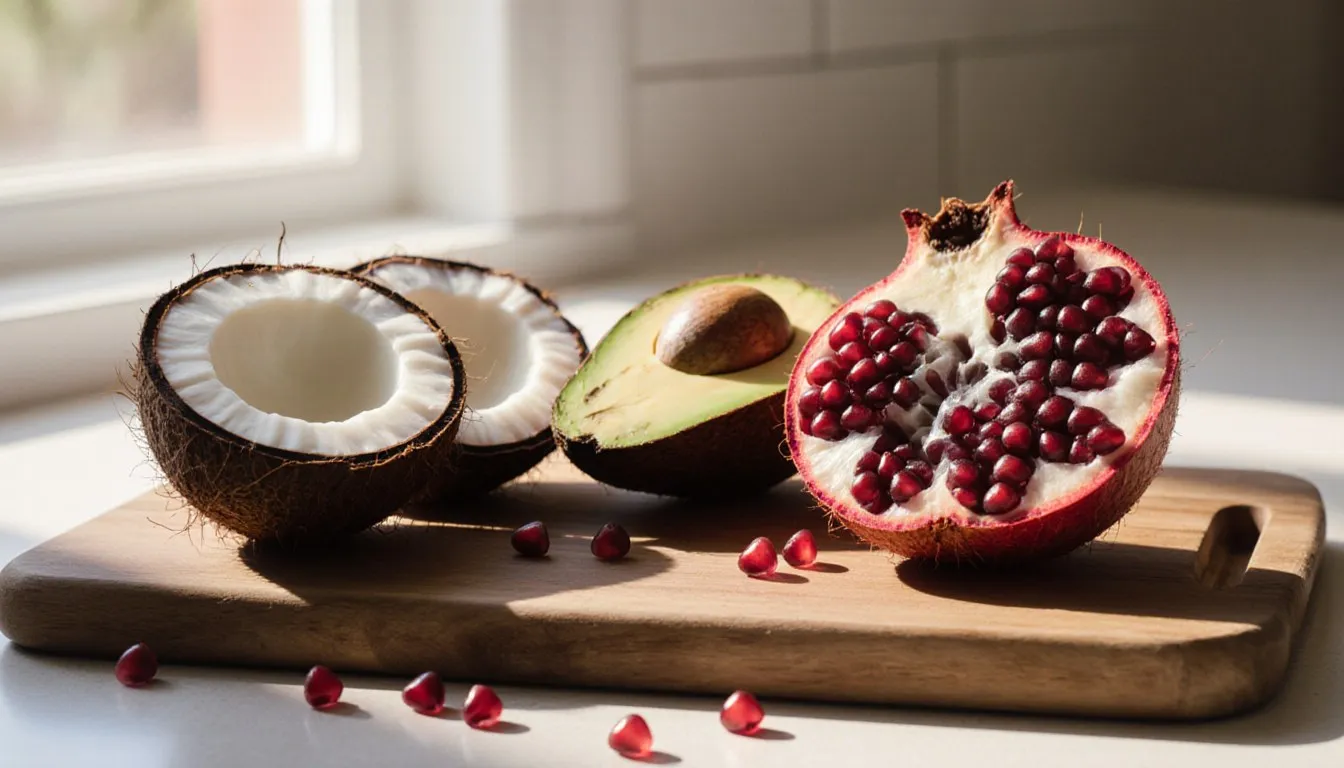
- Coconut meat, fresh or dried, is the fruit most likely to surprise you.
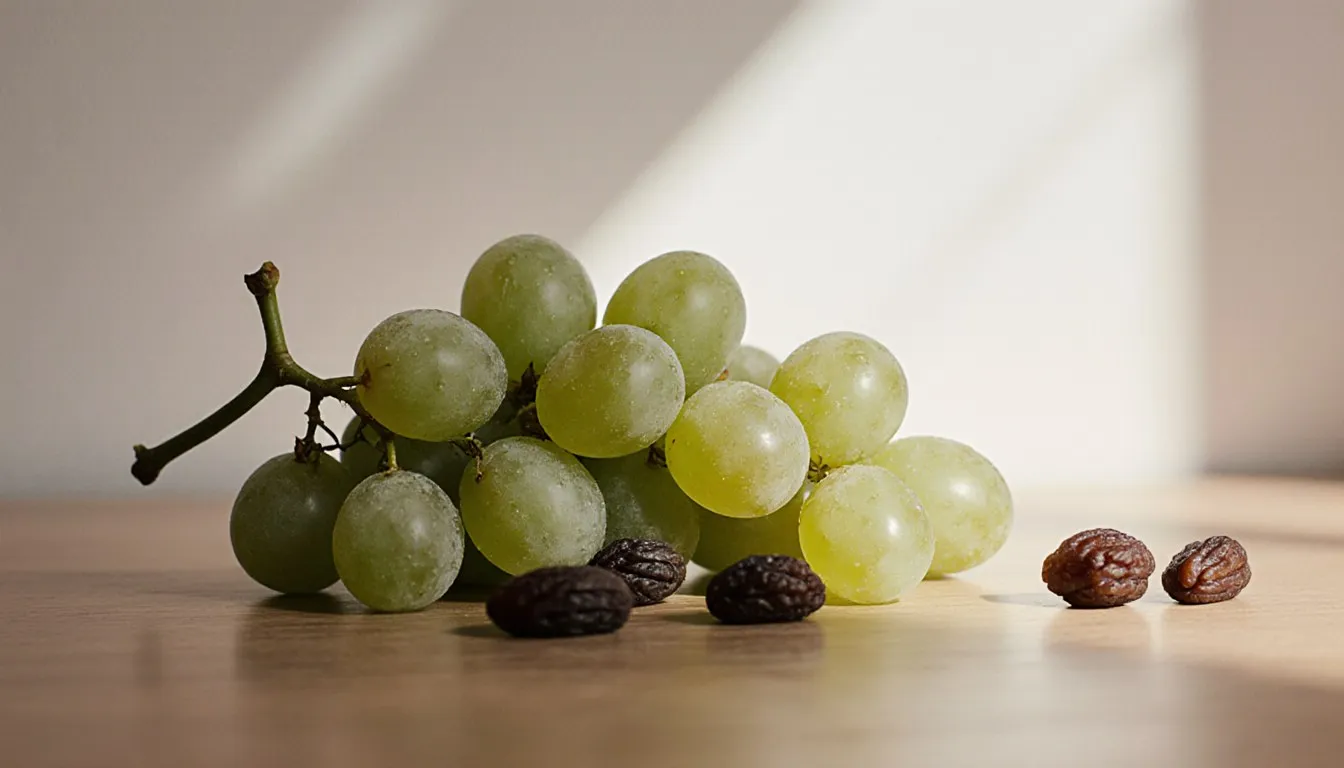
- Grapes are the sleeper of the group: the standard red or green table grape carries more arginine, cup for cup, than any other everyday fresh fruit here, which surprises nearly everyone who looks it up.
- Avocado carries a real, if smaller, amount, and it’s the one you’re most likely to already be eating regularly.
- Dried apricots punch above their weight because drying concentrates everything in the fruit, into a smaller, denser bite.
- Pomegranate and its seeds add a modest amount, more notable for the antioxidants that come along with it.
- Watermelon is on nearly every list you’ll find about this topic, but for a slightly different reason we’ll get into.
- Dates land near the bottom of this group but still ahead of most fresh fruit, for the same drying-concentration reason as apricots.
That’s the list. It’s short on purpose, because past this point you’re into fruit that just doesn’t carry much arginine to begin with, the kind of number that doesn’t move the needle no matter how many you eat.
Why fruit isn’t where arginine really lives
Arginine is an amino acid, which means it’s a building block of protein, and it shows up in the biggest amounts wherever protein shows up in the biggest amounts. That’s nuts and seeds first (pumpkin seeds, peanuts, walnuts), then meat, poultry, and seafood, then dairy and soy. Fruit is mostly water, fiber, and sugar. It’s built to give you vitamin C and quick energy, not amino acids.
I say this as someone who has, more than once, tried to solve a nutrition problem by just eating more fruit because it felt like the pleasant option. It rarely works out the way I hoped. Fruit is wonderful for a hundred reasons, but stacking your arginine hopes on a fruit bowl is a bit like trying to fill your gas tank with a watering can. You’ll get somewhere, eventually, technically.
To put it in scale, a cup of pumpkin seeds can carry something like 7 grams of arginine on its own, and a chicken breast beats every fruit on this list combined. Fruit was never built to compete with nuts and meat on this particular nutrient, and that’s fine. It has other jobs to do.
If you’re building out a fuller picture of where arginine actually shows up in a typical diet, that’s really a job for the whole arginine rich foods list rather than this one narrower question, since fruit is genuinely one of the smaller categories on that list, sitting well behind nuts, seeds, and meat.
Coconut and avocado: the two fruits worth noticing
These two are the closest thing to a real answer on this list, so they earn a closer look.
Coconut meat, the white flesh you scoop out of a fresh coconut or buy shredded and unsweetened, is the standout. It’s not a fruit most people eat by the bowlful, but it shows up constantly in small amounts: a spoonful of shredded coconut on oatmeal, coconut flakes in trail mix, coconut milk in a curry. None of those are large servings, but they add up faster than you’d expect from something that reads as a garnish. Fresh coconut is more of a project, cracking one open takes some doing, and a whole one runs a few dollars, but a bag of unsweetened shredded coconut lasts through weeks of spoonfuls and works out to pennies per serving, so the everyday version of this habit is cheap even if the whole-fruit version isn’t. If you’re someone who already cooks with coconut milk or keeps unsweetened flakes around for baking, you’re getting more out of that habit than the ingredient list would suggest.
Avocado is the more realistic everyday option, mostly because half an avocado on toast is already a normal Tuesday breakfast for a lot of people, not a special effort. It has less arginine than coconut per typical serving, but it’s a food people actually eat in real quantities, regularly, without having to think about it as a “health food.” That’s the part that actually matters: a food you eat three times a week beats a better food you eat once a year. Avocados aren’t always cheap, prices swing with the season and can climb to two or three dollars each, but half an avocado a few times a week is manageable if you buy them a few days ahead and let them ripen on the counter instead of paying extra for ones that are ready to eat today.
A quick note on portions, since “how much” questions always come up here: neither of these is something you need to measure out with a kitchen scale. A normal serving, a quarter to a half avocado, a couple tablespoons of shredded coconut, is the useful amount. Eating triple that doesn’t triple the benefit in any meaningful way, it just triples the calories.
Dried fruit: apricots, dates, and raisins
Drying fruit removes water and leaves everything else behind in a smaller package, which is why a handful of dried apricots can outperform a whole fresh one on a nutrient-per-ounce basis. Apricots are the standout in this group. Dates are close behind. Raisins bring up the rear of this trio, though like all dried fruit they read higher ounce for ounce than the fresh grapes they started as.
Here’s the honest trade-off, and I’d be doing you a disservice if I skipped it: drying concentrates the sugar right along with everything else. A small handful of dried apricots is a reasonable snack. A large handful eaten straight from the bag while you’re half-watching a show is easy to do and adds up in calories and sugar fast, in a way fresh fruit doesn’t because fresh fruit is mostly water and takes longer to eat past the point of feeling full. My rule for myself, and the one I’d actually hand you, is to treat dried fruit like a topping rather than a snack on its own: a spoonful of chopped dried apricots on yogurt or oatmeal, a few dates blended into a smoothie, rather than a bag eaten on the couch.
Unsulfured, no-sugar-added dried apricots are worth looking for specifically. Some brands add extra sugar syrup on top of what’s already naturally there, which doesn’t do you any favors and isn’t necessary.
What about watermelon and pomegranate?
Watermelon’s real claim to fame here is citrulline, a different amino acid that’s especially concentrated in the white rind, the part most of us throw away. Your body converts citrulline into arginine after you eat it, which is why watermelon keeps coming up in arginine conversations even though the fruit itself doesn’t deliver much arginine directly. The connection is real, it just runs through citrulline first. If you’re someone who juices the rind or blends the whole thing, you’re getting more of that citrulline benefit than someone eating just the sweet red center.
Pomegranate is more straightforward: the seeds (arils, technically) carry a modest, direct amount of arginine, plus the antioxidants that get most of pomegranate’s attention anyway. It’s not going to outrank avocado or coconut. Pomegranates usually run a couple of dollars each, and one deseeded pomegranate gives you enough seeds for four or five servings scattered over yogurt, oatmeal, or a salad, so the fruit itself isn’t cheap but the cost per spoonful is small.
Do bananas, grapes, or strawberries make the list?
Short answer: bananas and strawberries, not really. Grapes, surprisingly, yes, they’re the one favorite that actually earns a spot, which is why they made the ranked list above. All three show up in search results next to arginine constantly, mostly because people already know these fruits well and want to know if a favorite counts. Bananas are worth a longer look, but for a different amino acid: their lysine and arginine levels run close to even, neither one clearly ahead, and that comparison deserves its own answer rather than a quick aside here, so the question as people actually type it, are bananas high in lysine or arginine, gets a proper answer of its own.
Strawberries are the straightforward one: mostly water and sugar, with only trace amounts of arginine, nowhere near enough to change your day even if you ate a whole bowl. Grapes are the quiet surprise of this whole list, because the standard red or green table grape carries more arginine than almost any other common fruit, a couple times a banana’s number, though still a small amount next to nuts or meat. Strawberries stay worth eating for plenty of other reasons, vitamin C, fiber, the simple fact that they’re pleasant to eat, just not this one. If you want the specifics spelled out with actual numbers, the questions “are grapes high in arginine” and “are strawberries high in arginine” each get a full answer of their own.
A realistic way to work arginine-friendly fruit into your week
This is the part I actually care about, because a list of foods is useless until it turns into something you do on a Tuesday without thinking too hard about it. A few swaps that take under a minute each:
- Half an avocado, mashed, on toast instead of just butter. Add a squeeze of lime and a pinch of salt and you’ll forget you were doing this for a nutritional reason at all.
- A tablespoon of unsweetened shredded coconut stirred into oatmeal or yogurt in the morning.
- A small handful, maybe a dozen, of unsweetened dried apricots as your afternoon snack instead of whatever’s within arm’s reach at 3pm.
- A spoonful of pomegranate seeds over yogurt, oatmeal, or a green salad. They keep in the fridge for about a week once you’ve deseeded one, so it’s not a one-and-done effort.
- Watermelon as-is in summer, no changes needed, just don’t expect it to be doing the heavy lifting.
If you only pick one thing off this list, make it the avocado toast or the coconut-in-oatmeal swap, since both are things you can fold into a meal you’re already making rather than a new task you have to remember to do. Write the short list, coconut, avocado, dried apricots, pomegranate seeds, on the back of your grocery receipt or in your phone’s notes app before you shop, and you’ll actually buy them instead of standing in the produce aisle trying to remember what this article said.
Is fruit enough, or do you need more than that?
Honestly, no, not on its own, and I’d rather tell you that plainly than let you assume a fruit bowl is doing more than it is. If you’re looking into arginine because of a specific goal, whether that’s general wellness curiosity or something more targeted, fruit alone isn’t going to get you into a meaningfully “high arginine” range. Nuts, seeds, poultry, and legumes are where the real volume is, and if that’s the direction you’re actually trying to go, the fuller list of arginine-rich foods is the better place to build a real plan from.
Where fruit earns its spot is as the easy, tasty edge of that plan: the avocado you were already going to eat, the pomegranate seeds that make yogurt feel like dessert, the dried apricots that beat whatever’s in the vending machine. Build the rest of your plan around nuts, seeds, and protein, and let fruit be the part that makes it feel good instead of like a chore. If you do nothing else this week, just make the avocado toast. That’s the whole assignment.
This is general wellness information, not medical advice. Talk to a healthcare professional about your specific situation, especially if arginine intake is relevant to a medical condition or medication you’re taking.
Maya Ellison
Staff Writer
Maya Ellison writes about living a little better on an ordinary budget and an ordinary schedule: the small, doable changes that actually stick. She is a fan of the 20-minute version of everything and deeply suspicious of any wellness plan that requires a spare $400.