What Does a Yellow Flower Symbolize? Friendship, Joy, and Fresh Starts
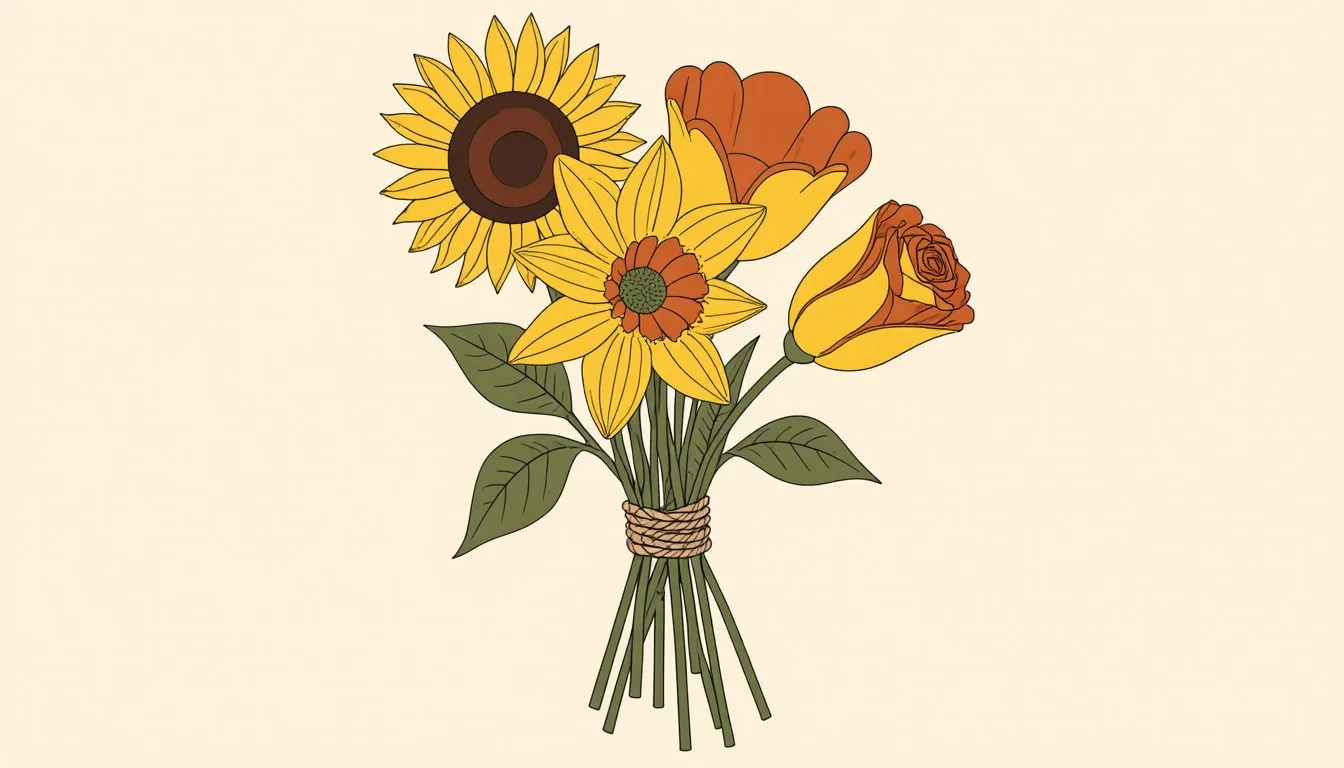
You’re standing at the counter with a bunch of yellow tulips in your hand, or you just got handed a card with a yellow rose printed on it, and you’re doing the thing we all do: trying to reverse-engineer what the color is supposed to say. Here’s the short version. A yellow flower symbolizes friendship, warmth, joy, and new beginnings. It’s the color of “I’m glad you’re in my life” or “welcome to the neighborhood,” not “I’m in love with you.” If you’re picking yellow for a friend, a coworker, a new parent, or someone who just got good news, you’re on solid ground.
But if you’ve heard a whisper that yellow also means jealousy, you’re not imagining it. That reputation is real, it’s just a lot older and a lot less relevant than the friendship meaning, and it’s worth understanding so you can actually stop worrying about it. Let’s get into where all of this comes from and how to pick the right yellow bloom for whatever you’ve got going on.
What does a yellow flower symbolize, in one line?
Friendship, happiness, and a fresh start. That’s the meaning you’ll find repeated across florists, gift guides, and the language of flowers going back well over a century. Florists will tell you yellow is the brightest, warmest color on the flower wheel, and in most Western gift-giving it reads as sunshine, energy, a good mood. That’s not a universal read, though: in parts of East Asia yellow chrysanthemums are traditionally a funeral flower, and in some Middle Eastern gift-giving yellow is said to hint at betrayal or a lack of respect, so it’s worth knowing your audience before you lean on it. It’s the color you send when you want someone to feel cared for without any romantic undertone attached.
That’s why yellow flowers are a safe, even smart, choice for the relationships in your life that aren’t romantic but still matter. Your best friend. Your mom. The neighbor who watered your plants while you were out of town. I’ve sent yellow flowers to exactly that kind of person more times than I can count, and I’ve never once had someone read it the wrong way.
Why did yellow flowers come to mean friendship and happiness?
Two things are doing the work here. The first is just color psychology, plain and simple: yellow is associated with sunlight, optimism, and energy across a wide range of cultures, the same reason a yellow kitchen feels different from a gray one. Stand in a yellow room for ten seconds and you’ll feel it: warm colors read as approachable and upbeat, no explanation needed. Cool colors read as calm or distant. Yellow lands squarely in “upbeat.”
The second is more specific, and it’s the part flower nerds actually care about: the Victorian language of flowers, or floriography. In the 1800s, when saying your feelings out loud was often considered improper, people leaned hard on flower color and species to say things a note couldn’t. Red roses got claimed for romantic love early and never gave it up. Yellow, brighter and less intense-feeling than red, got assigned to warmth that stopped short of romance: friendship, welcome, joy. That coding stuck, and it’s largely why we still reach for yellow blooms today when we want to say “I appreciate you” without anyone assuming there’s more going on.
Wait, isn’t yellow also supposed to mean jealousy?
Yes, and this is the part that trips up almost everyone who goes looking. Alongside the friendship meaning, yellow, and yellow roses in particular, picked up an association with jealousy and even infidelity somewhere in that same Victorian era. Flower-lore writers have long credited this to the era’s flower dictionaries, which sometimes listed a “jealous” or “decrease of love” meaning right next to the cheerful one, and the two meanings have been floating around together ever since.
Nobody can point to a single clean origin story for it, the way you sometimes can with a specific flower and a specific myth. It reads more like one strand of a tangled Victorian tradition that never fully got sorted out, one guidebook copying another, a symbolic meaning drifting sideways over a few decades. Here’s the honest take, from someone who has bought a lot of flowers for a lot of occasions: florists sell yellow roses as the friendship flower, and nobody behind the counter is reading it as an accusation. If you hand someone a bunch of yellow flowers, they are going to think “how nice,” not “are you accusing me of something.” The friendship and joy meaning has completely won out in modern gifting. Keep the jealousy footnote in your back pocket as a fun fact for a dinner party, not as a reason to second-guess your bouquet.
Does the meaning change depending on which yellow flower it is?
A little, yes, the same way “thank you” and “thanks so much” both work but land slightly differently. The flower itself adds its own flavor on top of the base yellow meaning.
- Yellow roses are the classic friendship flower, specifically. If you want to say “I care about you” to someone without a hint of romance, a yellow rose meaning friendship is about as clear as flower language gets, and it’s the pick most people already associate with platonic warmth.
- Sunflowers read as big, unmissable happiness. They’re less “quiet appreciation” and more “I am genuinely thrilled for you,” which makes them a great fit for celebrations.
- Daffodils lean into renewal and fresh starts, partly because they’re some of the first flowers up in spring after a long winter. They’re the ones to reach for when someone is starting over: a new job, a new home, a new chapter.
- Yellow tulips sit closer to casual, easy friendship and cheerful thoughts. They feel a touch more relaxed than a dozen yellow roses, the bunch you grab on a random Tuesday just because you saw them and thought of someone.
If you want the fuller picture of how meaning shifts by shade across the whole palette, not just yellow, flower meanings by color walks through it flower by flower and color by color.
When is giving yellow flowers a genuinely good call?
This is the short list I actually run through at the counter when I’m deciding if yellow is the right call. None of these need a big budget or any inside knowledge of the recipient’s taste.
- Welcoming someone new. A new neighbor, a new coworker, someone who just moved into your building. Grab a five-dollar grocery-store bunch on your way over, the kind you can carry in one hand along with a casserole dish. Yellow says “glad you’re here” without requiring any history to back it up.
- Get-well wishes. Florists say this is one of the biggest occasions for yellow flowers, and it tracks: a hospital room is beige and fluorescent, and a cheap bunch of daffodils on the windowsill tray table is the one cheerful thing in it. You don’t need anything fancy, a small bunch does more good than a $70 arrangement that eats the only flat surface in the room.
- Celebrating a friend’s win. A promotion, a graduation, a good diagnosis, finishing a hard project. Sunflowers run maybe $15 to $25 depending on your grocery store, more than a mixed bunch, but they photograph well for the group text and say “I see this and I’m happy for you” louder than most other colors manage.
- Someone’s first day. New job, new school, first day home with a new baby. Daffodils are usually the cheapest thing in the cooler for most of the year, since they bloom so early, and the fresh-start association fits a moment when nobody has the energy to think about flower symbolism anyway.
None of these require you to know the recipient’s favorite flower or agonize over a color wheel. That’s the appeal. Yellow is close to foolproof for anyone you like but aren’t dating.
When might yellow flowers send the wrong message?
Two situations where I’d steer you elsewhere, and neither is about the jealousy folklore.
The first is a romantic gesture. Yellow simply isn’t coded as romantic, so a first date, an anniversary, or a “will you be my Valentine” moment is going to feel a little off if the color is doing friendship-flower work instead of love-flower work. If that’s your occasion, flower meanings love covers the colors and species that actually carry that message.
The second is anything somber. A funeral, a sympathy bouquet, a hospital visit for someone in serious condition rather than recovering from something minor. Yellow’s cheerfulness can read as mismatched with grief, even tone-deaf, in a room that needs something quieter. For that situation, the flower meanings death guide lays out what’s traditionally considered appropriate instead, and it’s worth a look before you order anything for a service.
Outside of those two, yellow is genuinely hard to get wrong.
How do you pick the right yellow flower for the moment?
I’m a big believer in not overthinking gift-giving, so here’s the shortcut version I actually use, cost included: a grocery-store bunch of tulips or daffodils runs a few dollars and works just as well as a fussier arrangement for most of these occasions, and a dozen roses from a florist will run you closer to $40 to $60 for when you want the gesture to feel more considered.
- Big, cheerful gesture: sunflowers. Go big, they photograph well and they read as pure enthusiasm.
- Spring, renewal, a fresh start: daffodils. Especially good for new-home or new-job moments.
- Casual, low-key friendship: yellow tulips. The “just because” bouquet.
- Warmth without any romantic read: yellow roses. The safest, most universally understood pick when you specifically want to avoid a romantic message.
If you’re the type who wants this on the fridge instead of buried in a browser tab, grab the free printable pocket card, “Which Yellow Flower for Which Occasion,” it’s a quick-pick guide built for exactly the moment you’re standing at a flower counter with fifteen seconds to decide. Beyond that, if you want the full sweep of what different flowers and colors mean across every occasion, not just yellow, flower meanings and symbolism is the place to start.
The short version, one more time before you go pick your bouquet: yellow means friendship, joy, and new beginnings. The jealousy story is real folklore, but it’s old news that nobody in a flower shop is thinking about. Match the flower to the occasion using the guide above, hand it over, and don’t think about the jealousy footnote again.
Maya Ellison
Staff Writer
Maya Ellison writes about living a little better on an ordinary budget and an ordinary schedule: the small, doable changes that actually stick. She is a fan of the 20-minute version of everything and deeply suspicious of any wellness plan that requires a spare $400.