What Does a Blue Rose Symbolize? A Flower That Isn’t Real
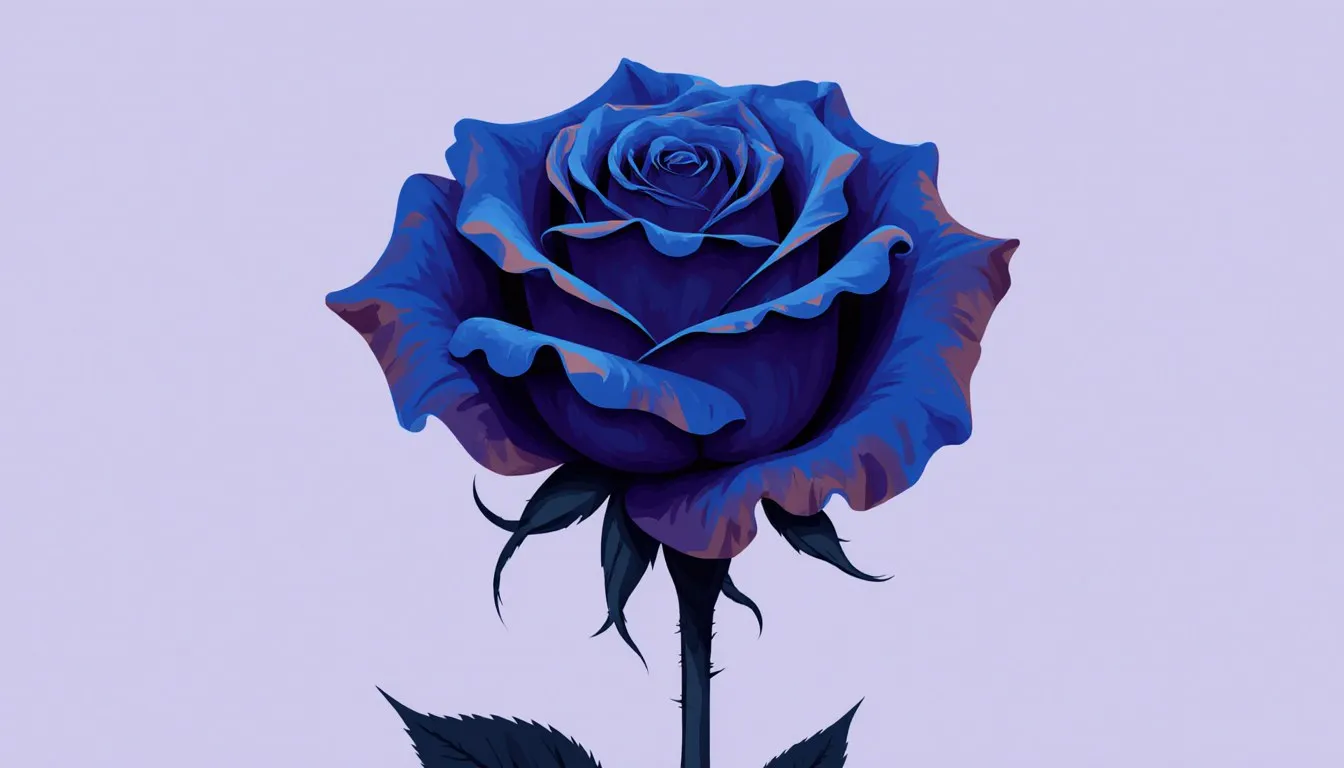
Ask a florist to grow you a true blue rose and you’re asking for something that has never happened in nature, not once, in the entire history of the genus Rosa. That’s exactly why the flower means what it means: a blue rose symbolizes mystery, longing, and the wish for something rare or just out of reach. It’s the flower equivalent of wanting the moon, and yet you can walk into a flower shop this afternoon and buy one anyway, dye job and all.
What does a blue rose symbolize?
A blue rose stands in for mystery, the unattainable, and longing for something rare or hard to reach. Give one to a partner and it can read as “I’d cross any distance for you.” Give one for an achievement and it says “you did something almost nobody pulls off.” Give one just because and it says something closer to “you’re not like anyone else I know.” The common thread in all three is scarcity: blue roses mean what they mean because, biologically, they shouldn’t exist.
That’s a different kind of symbolism than a red rose gets. Red is common and immediate, love that’s already here. Blue is aspirational, love (or hope, or ambition) that’s still being reached for. If you’ve ever wanted something so specific and so unlikely that you half-joked you’d need a miracle, that’s the emotional register a blue rose is built for.
Are blue roses even real?
No rosebush anywhere has ever naturally produced a true blue bloom, and there’s a specific chemical reason why. Blue pigment in flowers comes from a compound called delphinidin, and roses simply don’t carry the gene for it. You’ll find delphinidin in delphiniums (hence the name), violets, and some hydrangeas, but the Rosa genus never got that particular piece of biochemical hardware, no matter how many generations of breeders have crossed and recrossed roses chasing the color.
I think about this the same way I think about the “blue” food dye at kids’ birthday parties: it’s a color our eyes read as blue, layered onto something that was never built to hold it. Rose breeders have spent well over a century trying to get closer, and the best they’ve managed the honest way is deep purples, mauves, and lilacs, gorgeous colors, but not blue. That gap between “close” and “true blue” is the whole reason the flower became shorthand for the impossible in the first place. If blue roses grew on every corner bush, nobody would be writing poems about them.
So where do the blue roses in shops actually come from?
If you’ve picked up a blue rose at a grocery store or florist, it got its color one of two ways, and both of them happen long after the rosebush is done with it.
The first, and by far the most common, is dyeing. White roses have almost no natural pigment to compete with, so they take dye beautifully. Florists either dip the open blooms in a colored solution or, more often, cut the stem and let the flower draw a blue dye up through its own water system the way it would draw plain water, so the color settles into the petals from the inside. This is the version you’ll see stacked in buckets at most grocery store floral counters, and it’s affordable enough to grab on a whim, which is honestly part of the appeal.
The second is genetic engineering, and it’s a much bigger deal than a dye job. In the mid-2000s, the Japanese beverage company Suntory partnered with the Australian biotech firm Florigene to insert a pansy gene for delphinidin production into a rose, and after years of work they released what they called the Applause rose. It doesn’t produce a pure sky blue either (the closest it gets is a soft blue-lavender), but it’s the nearest science has come to a rose that manufactures its own blue-leaning pigment rather than wearing someone else’s. Applause roses are a specialty item, not a grocery store staple, and if you track one down it’ll cost more and take more looking than a dyed one. That’s the trade-off in plain terms: cheap and easy to find versus rare and closer to the real thing.
Where does the “impossible love” meaning come from?
The meaning predates modern dyeing and genetic engineering by a long way, which tells you something: people wanted a symbol for the unreachable before they had any way to manufacture a blue rose at all.
Trace it back to the Victorian era, when strict social codes made it awkward to say certain things outright, so people said them with flowers instead. This was floriography, the language of flowers, and it worked a lot like the captions you write now: you’re handing someone a coded message and trusting they’ll read between the lines. Because a genuinely blue rose didn’t exist, it got assigned to the one feeling that also didn’t quite exist yet: wanting something you couldn’t have. If you’d sent one back then (in theory, since you couldn’t actually buy one), you’d have been telling someone their love felt out of reach, impossible, or forbidden, the Victorian version of a meaningful song lyric in your Instagram bio.
That thread runs straight into literature, and here’s the example I keep coming back to. In Tennessee Williams’ The Glass Menagerie, the fragile, dreamy Laura gets nicknamed “Blue Roses” after a classmate mishears her saying she had pleurosis. The nickname sticks because it fits her: lovely, unusual, and slightly out of step with the ordinary world around her. Read the play and you’ll feel exactly why that nickname lands harder than her real one. It’s the same instinct at work if you’ve ever picked an unusual flower for someone specifically because “rare and a little strange” described them better than “pretty” did, and it’s part of why the association still feels natural a century later, showing up in everything from fantasy novels to tattoo flash sheets.
Does a blue rose mean something different depending on the occasion?
The core idea, rarity and longing, stays the same across occasions, but the shading shifts depending on who’s getting the bouquet.
- Romantic gift: leans toward “I want something with you that feels rare,” or, in a more wistful reading, a love that feels distant or unresolved. It’s a more layered message than a dozen red roses, so it tends to land best with someone who’ll actually sit with the symbolism rather than just clock the color.
- Congratulations: shifts toward “you did something almost nobody manages.” A blue rose for a graduation, a promotion, or a big creative win reads as recognition that the achievement was genuinely rare, not just nice.
- Just because: softens into something playful and a little whimsical, closer to “you’re one of a kind” than any heavier message about longing. This is the easiest occasion to get right, since there’s no romantic subtext riding on it.
In every version, the flower is doing the same basic job: flagging that whatever you’re celebrating or expressing is unusual enough to deserve an unusual flower.
How does a blue rose’s meaning compare to other rose colors?
Blue sits at the far end of the rose color spectrum from something like red, which is about as direct and unambiguous as flower language gets.
Grab yellow if you want “congratulations” without any romantic undertone. It’s the color for friendship and celebration, and it’s what I’d point you to for a coworker’s promotion instead of blue.
Pink leans sweet and admiring. White reads as new beginnings, which is why it shows up at weddings and christenings. Lavender splits the difference between blue’s mystery and pink’s warmth.
None of them carry blue’s specific “I want the impossible” weight, so if that’s not the message you’re going for, one of them is probably the better, less loaded pick. If you want the fuller breakdown, the complete rose flower meaning guide walks through what each shade signals.
Should you actually give someone a blue rose?
Here’s my honest take, the one I’d give a friend texting me a photo from the flower cooler at 5:45 on their way to a date. A blue rose is a great choice when the person receiving it will actually get the reference, someone who likes a little mystery, reads, leans toward fantasy or sci-fi, or just appreciates a gift that isn’t the obvious move. It’s also genuinely fun for a milestone that felt like a long shot: a hard-won job offer, a degree finished on a nontraditional timeline, a goal that took way longer than anyone expected.
Where I’d steer you toward a different color: if what you actually want to say is a plain, unmissable “I love you,” red still does that job better than anything layered with mystery-and-longing symbolism can. Blue roses ask the recipient to do a little interpretive work, and not everyone wants homework attached to their flowers. If you do go with blue, don’t leave the meaning to chance. A single line on the card, something like “because some things are worth wanting even when they’re rare,” does more work than the flower can do alone. It turns a slightly odd choice into an obviously thoughtful one.
And if the budget’s tight, don’t feel like you need the lab-engineered Applause rose to make the gesture land. A dyed blue rose from the regular floral case says exactly the same thing symbolically. The person receiving it isn’t going to run a pigment test.
Blue rose meaning: quick answers
- Are blue roses dyed or natural? Almost always dyed. A small number are the genetically engineered Applause variety, but true, naturally blue roses don’t exist in either case, since no rosebush produces blue pigment on its own.
- What color of rose is closest to true blue? Lavender and mauve roses are the nearest thing nature manages without help, a soft purplish-blue that breeders have coaxed through selective crossing over many generations. They’re sometimes sold under names that suggest blue, but they read as lilac or dusty purple in person.
- Do blue roses fade back to white? Dyed roses can lose vibrancy as the flower matures and new petal growth opens up paler or untouched by the dye, so a bouquet can look patchier and closer to white around the edges after several days in the vase. That’s just how the dye behaves as the bloom keeps growing.
However you land on this, don’t overthink it: grab the blue rose if it fits the moment, reach for red or yellow if that’s what you actually mean, and either way, write one honest line on the card. That’s the whole trick, and it takes about ten extra seconds at the register.
Maya Ellison
Staff Writer
Maya Ellison writes about living a little better on an ordinary budget and an ordinary schedule: the small, doable changes that actually stick. She is a fan of the 20-minute version of everything and deeply suspicious of any wellness plan that requires a spare $400.