
Standing in the Flower Cooler, Not Sure What to Send
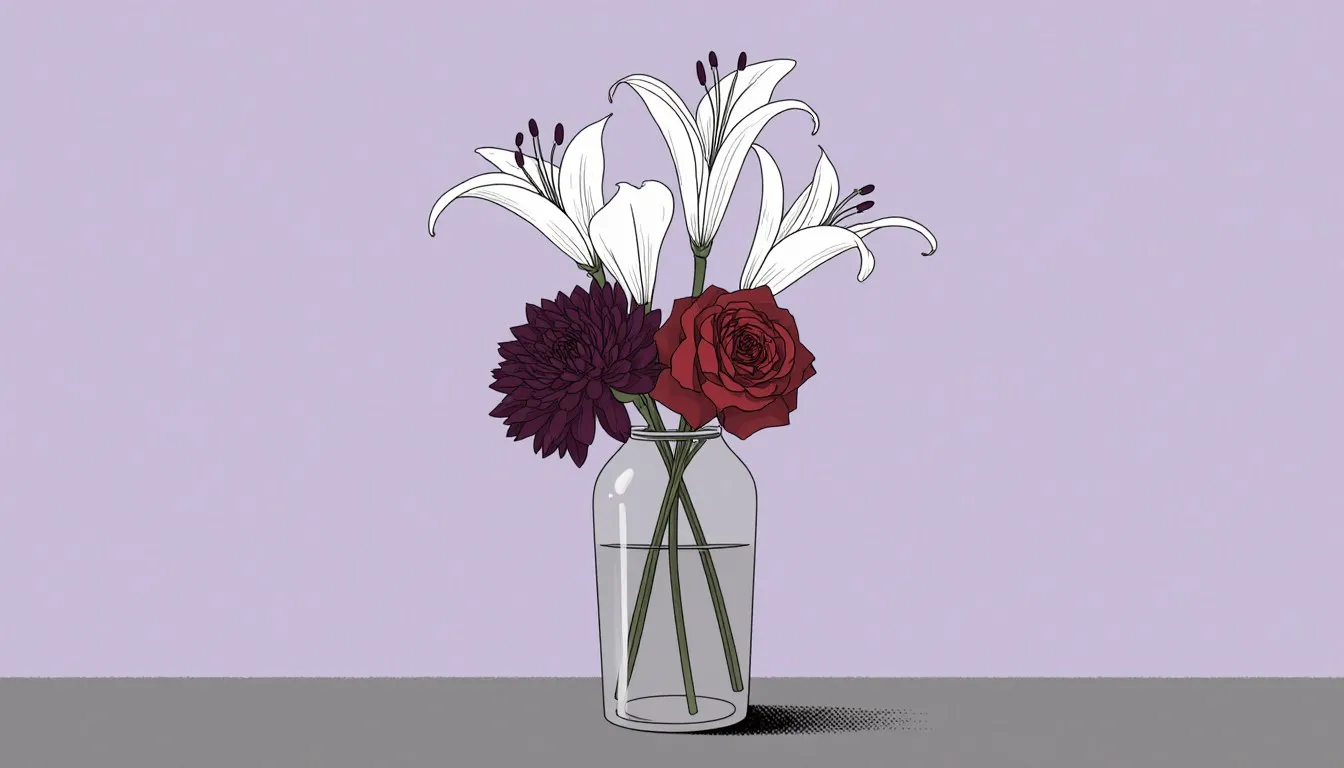
You’re standing in front of a cooler full of buckets, a card in one hand and your phone in the other, and every arrangement behind the glass looks like it’s speaking a language you don’t know. That’s the actual problem with sympathy flowers. Nobody teaches you this, and you’re picking it out under a deadline you didn’t choose. So here’s the short version: white lilies say something different than a mixed spring bouquet, chrysanthemums carry real weight in some cultures and none in others, and the flowers meant for a funeral service are physically different from the ones meant for someone’s kitchen table three weeks later. Once you know that much, the rest of the choice gets a lot less overwhelming.
I’ve made this exact trip more times than I’d like, usually with fifteen minutes before the shop closes and a lump in my throat I wasn’t expecting. What helped was realizing every arrangement in that cooler is saying the same thing on your behalf: I’m here, I’m sorry, I’m thinking of you and your family. Picking the right flowers is really just picking the right way to say that.
What are you actually trying to say with sympathy flowers?
Here’s the thing nobody tells you before you’re standing there overwhelmed by choices: you’re choosing a feeling as much as you’re choosing a bouquet. A grieving family registers the color, the softness, the overall impression, and the fact that someone thought of them enough to send something at all. That’s most of the job, right there.
The flower meanings do matter, and we’ll get into the specifics, but they matter the way tone of voice matters more than word choice. A soft, all-white arrangement reads as gentle and respectful before anyone identifies a single lily. A bright, cheerful mix of gerberas and sunflowers reads as a little off-key in a funeral home, even if every flower in it is technically lovely. You’re aiming for something that matches the quiet, respectful feeling of the room.
If you take nothing else from this, take this: when in doubt, go soft, go pale, and go simple. It is very hard to get that wrong.
What do the classic sympathy flowers mean?
Florists lean on a small, familiar cast of flowers for grief because these are the ones that have carried this specific meaning for generations. Knowing what each one is quietly saying helps you pick with intention instead of just pointing at whatever’s prettiest.
White lilies
White lilies, especially the tall, trumpet-shaped Casablanca and Oriental varieties, are the flower most associated with funerals in Western tradition, and for good reason. They’re traditionally understood to represent the restored innocence of the soul after death, the idea that the person has returned to a state of peace. That’s a heavy, specific meaning to carry, and it’s exactly why lilies show up on so many standing sprays and casket arrangements. One thing worth knowing before you order: lilies have a strong fragrance, which is lovely in a large funeral home but can be a lot in a smaller room. If the arrangement is headed to someone’s house rather than a service, ask your florist to go lighter on them.
Chrysanthemums
Chrysanthemums, or mums, are a sympathy workhorse in the United States: full, long-lasting, and available almost year-round, which makes them a practical, affordable base for larger arrangements. But their meaning genuinely shifts depending on where you are, which we’ll dig into in the next section. In American florist shorthand, a mum-heavy arrangement reads as classic and respectful. Nothing more complicated than that.
Carnations
Carnations get a little underrated, honestly, probably because they’re inexpensive and everywhere. But they hold up beautifully, they come in soft whites and pale pinks that read as gentle rather than showy, and pink carnations specifically carry an old association with remembrance and a mother’s undying love, which makes them a thoughtful choice for a mother, grandmother, or maternal figure. Don’t let the price tag fool you into thinking they say less. They don’t.
Gladiolus
Gladiolus are the tall, spiky stems you’ll spot holding up the back of a standing spray, giving it height and structure. They’re traditionally tied to strength of character and moral integrity, so in a sympathy piece they read as an acknowledgment that the person’s strength is remembered. Honestly, you probably won’t pick gladiolus on their own, you’ll get them by default in a bigger arrangement, and that’s fine. If your florist asks whether you want them included, say yes: they’re what keeps a standing spray from looking floppy by the second day.
White and deep red roses
Roses shift meaning almost entirely by color, which gets its own full breakdown if you want to go deeper into flower meanings by color, but here’s the version scoped to grief. White roses in a sympathy arrangement lean toward reverence and a kind of quiet, humble goodbye, purity without any of the romantic weight red usually carries. Deep red roses, on the other hand, are sometimes chosen specifically for a spouse or a very close loved one, because red still reads as deep love and respect even inside a sympathy piece. It’s one of the few places where a “romantic” flower crosses over into funeral use without feeling out of place.
Are there flowers you should think twice about sending?
Nothing here is a hard rule, flowers aren’t landmines, but there are a few blooms where the mismatch between what they usually mean and what the room needs is worth pausing on.
- Very bright, celebratory flowers like sunflowers, gerbera daisies, or a rainbow mixed bouquet. Gorgeous flowers, wrong mood, unless the family has specifically said the person loved them and asked for something joyful and colorful instead of traditional. Some families genuinely want that, and if they’ve said so, take them at their word.
- Red roses alone, in bulk, without any white or softer tones mixed in, can read as more romantic than the room calls for, especially if you’re not the person’s spouse or partner. A few deep red stems worked into a fuller arrangement is different than a dozen on their own.
- Chrysanthemums, depending on where you’re sending them. This is the one regional wrinkle actually worth knowing. In much of Europe, especially France, Italy, Spain, and Poland, chrysanthemums are associated almost exclusively with death and cemeteries, to the point where sending them to someone’s home for any other occasion would land as strange or even unsettling. In much of Asia, particularly Japan and Korea, white chrysanthemums carry a similar heavy, funeral-specific weight. If you’re sending flowers to a family with European or Asian roots, or shipping internationally, it’s worth asking your florist or a family member whether mums are the right call, or whether something like lilies or carnations would feel more neutral.
One quick gut check, especially around chrysanthemums and bright colors, saves you from a well-meant gesture landing a little sideways.
Flowers for the service or flowers for their home: which one do you need?
Are these flowers going to the funeral home or the service itself, or are they going to someone’s house? It’s the question I ask every time someone tells me they’re heading to the florist, and it matters more than any single flower’s meaning.
Flowers for the service are built to be seen from a distance, in a room full of other arrangements, often displayed on an easel so they’re visible over the crowd. They’re big, they’re structured, and they’re typically sent by close family, coworkers as a group, or a company on behalf of an employee. If you’re one person sending flowers on your own, a full standing spray is usually more than you need and can run into real money for what amounts to one visual element among a dozen others in the room.
Flowers for the home are the ones that matter in the weeks after, when the funeral is over, the casseroles have stopped arriving, and the house is quiet in a new way. This is where a smaller, softer arrangement in a vase, something that can sit on a kitchen table or windowsill, does more good than you’d expect. It’s a small daily reminder that someone was thinking of them, long after the service itself is a blur. If you’re close to the family but not organizing anything with a group, this is usually the more personal, more useful choice.
My honest rule of thumb: if you’re sending flowers alone, without coordinating with other family or coworkers, send something meant for the home. Save the big standing displays for when several people are pooling together, or when a company or organization is sending on behalf of a group.
What’s the difference between a standing spray, a casket spray, and a smaller arrangement?
Walking into a florist and hearing terms like “standing spray” thrown around like everyone already knows what they mean is its own special kind of overwhelming. So here’s the plain-English version.
- A standing spray is a large, one-sided arrangement built on its own easel or stand, designed to be displayed upright at the front of the room during a service or at the graveside. It’s the tall, dramatic piece you picture when you think “funeral flowers.” These are usually sent by immediate family, a group of coworkers, or an organization.
- A casket spray is designed to lie directly across the top of the casket. Because of that, it’s almost always ordered by the immediate family or whoever is planning the service, since it needs to be sized and styled to match the casket itself. If you’re not in that inner planning circle, this generally isn’t yours to order, and most florists will actually tell you that if you call and ask.
- A smaller arrangement, whether that’s a vase arrangement, a basket, or a simple bouquet, is the flexible option. It can go to the funeral home to sit among the other displays, or straight to the family’s home. This is what most individual senders, friends, neighbors, coworkers acting alone, end up choosing, and it’s the right call more often than not.
One practical note: many funeral homes have their own preferences about size, timing, and where displays can be placed, and some will coordinate directly with your florist on delivery. If you’re ordering anything meant for the service itself, it’s worth calling the funeral home first, or just telling your florist the service location and letting them handle the logistics. They do this every week. You’re doing it for the first time in a while, maybe ever, and that’s exactly what they’re there for.
Does color still matter in a sympathy arrangement?
It does, but the palette for grief is narrower than for almost any other occasion, and that’s on purpose. Walk into any funeral home and you’ll see it immediately: wall after wall of white, because it reads as pure, peaceful, and respectful across most Western traditions, and florists know it. That’s why so many arrangements you’ll be shown first are all-white lilies and roses. It’s the safe answer, and there’s no shame in taking it. Soft pastels, pale pink, lavender, cream, come in a close second, gentle without tipping into the celebratory brightness of a birthday bouquet. Deeper tones, a little burgundy, a little sage green in the greenery, add warmth without breaking the mood.
If you want the fuller breakdown of what each color communicates across every kind of arrangement, not just sympathy, the complete guide to flower meanings by color covers that in depth. For a funeral or condolence arrangement specifically, though, the shorthand is simple: when you’re unsure, whiter and softer is safer, and a florist who does this regularly will steer you there automatically if you just tell them what the flowers are for.
What actually drives the price of sympathy flowers up or down?
I’ll be straight with you here, because I hate when articles dance around money. The honest answer is that sympathy flower pricing has a lot of moving parts, and most of them come down to a handful of decisions you’re making, whether you realize it or not.
- Size and format. A small vase arrangement for the home costs meaningfully less than a full standing spray, which needs an easel, a wire frame, and a lot more stems to fill it out.
- Which flowers you choose. Lilies and roses tend to run pricier than carnations and mums, so an arrangement built mostly around carnations with a few accent roses will cost less than one that’s roses and lilies front to back, without looking any less thoughtful.
- Time of year. Flowers that are in season locally cost less than ones being flown in. Around major holidays, like Valentine’s Day or Mother’s Day, rose prices in particular tend to climb across the board, sympathy orders included.
- Whether it’s arranged on an easel. Standing sprays require more structural work and more flowers to look full from a distance, which is reflected in the price compared to a simple table arrangement.
The one number I’ll actually give you, because it’s genuinely consistent across most florists, is that a basic sympathy bouquet commonly starts somewhere around $50 to $65. Everything above that, standing sprays, casket sprays, larger arranged pieces, varies enough by florist and region that your best move is just to ask your local shop for a quote based on what you want to send and where it’s going. Any florist who does regular sympathy work can walk you through tiers on the spot, and there’s no shame in saying your budget out loud. They’ve heard it before, and they’ll build something lovely at whatever number you give them.
What do you actually write on the card?
This is the part that stops people cold more than the flowers themselves. You’ve picked the arrangement, you’re standing at the little card table with a pen in your hand, and suddenly every sentence you try sounds wrong.
Here’s the good news: short and sincere beats clever every time. Nobody is grading your card for originality. A few starters that work in almost any situation:
- “Thinking of you and your family during this difficult time.”
- “So sorry for your loss. Sending love to you all.”
- “[Name] will be deeply missed. Holding you close in my thoughts.”
- “With deepest sympathy, from all of us at [company/team].”
- “No words feel like enough, but please know we’re thinking of you.”
If you knew the person who died, a single specific, warm memory beats a generic sentiment every time, even just one line: “I’ll always remember how she made every holiday feel bigger than it was.” That kind of specificity is worth more to a grieving family than any perfectly phrased condolence, because it tells them the person was actually seen and will be remembered for exactly who they were.
What if the family asks for donations instead of flowers?
“In lieu of flowers” requests trip people up because it can feel like doing nothing, and that discomfort is real. But here’s what’s helped me: the family is telling you exactly what they need instead of flowers, and that request deserves the same respect as any other. Honor it.
Donate to the organization named in the obituary, whether that’s a hospital, a charity tied to a cause the person cared about, or their church or synagogue. Keep the receipt or confirmation email if you want to let the family know, many donation platforms will send a card to the family on your behalf automatically. If no specific organization was named, a donation to a cause you know mattered to the person works just as well.
And if it still feels like you want to send something tangible on top of the donation, a small gesture weeks later, a card, a meal delivered, a simple potted plant sent after the initial flood of flowers has wilted, often means more than anything you could have added to the funeral home that day. That’s still true weeks and months after the funeral, long after almost everyone else has moved on.
If you remember one thing walking out of that florist cooler: you can’t really get this wrong as long as you go soft, go simple, and let your florist know exactly where the flowers are headed. That one detail does most of the work for you.
Maya Ellison
Staff Writer
Maya Ellison writes about living a little better on an ordinary budget and an ordinary schedule: the small, doable changes that actually stick. She is a fan of the 20-minute version of everything and deeply suspicious of any wellness plan that requires a spare $400.