That “SBP” on Your Printout Is Just Your Top Blood Pressure Number
You’re scanning the after-visit summary, or squinting at the little screen on the cuff you just wrapped around your arm, and there it is: “SBP 142.” No explanation, no context, just three letters and a number sitting there like it’s supposed to mean something to you. SBP stands for systolic blood pressure, and it’s simply the top number in your blood pressure reading, the pressure in your arteries at the exact moment your heart squeezes and pushes blood out. If your reading says 142/88, the SBP is the 142. That’s the whole mystery. What it means for you personally takes a little more unpacking, and that’s what we’re doing here.
I remember the first time I saw “SBP” on my dad’s discharge paperwork and had a small internal panic before realizing it was just shorthand for a number I already understood, the top one. Medical paperwork loves to abbreviate things that would’ve been perfectly clear written out in full, and blood pressure terminology is one of the worst offenders. So let’s take it apart piece by piece, without the panic.
What does SBP actually stand for?
SBP is short for systolic blood pressure. “Systolic” comes from systole, the split second your heart muscle squeezes and pushes blood out, the same beat you’d feel if you pressed two fingers to your wrist right now. That contraction creates the highest pressure your blood vessels experience during a single heartbeat, and that peak pressure is the number they’re recording when they write “SBP.”
You’ll almost always see it measured in mmHg, which stands for millimeters of mercury, a unit left over from the old mercury-column devices doctors used to use. Nobody’s actually measuring mercury anymore on a modern digital monitor, but the unit stuck around the way “dial the phone” stuck around long after phones stopped having dials.
So when a nurse or a machine says your SBP is 142, they mean: at the moment your heart contracted, the force against your artery walls measured 142 mmHg. On its own, that number is a snapshot. What it means depends on where it falls relative to typical ranges and what it’s doing over time, both of which we’ll get into.
Where will you actually see “SBP” written down?
Most often, it’s sitting right in your own chart notes or a patient portal summary, wherever a doctor or nurse recorded your numbers during a visit. Once you know to look for it, SBP turns up in a handful of other spots too.
- Chart notes and visit summaries. Doctors and nurses often chart blood pressure as “SBP/DBP” rather than writing out “blood pressure” every time, especially if they’re tracking it across several readings in one visit.
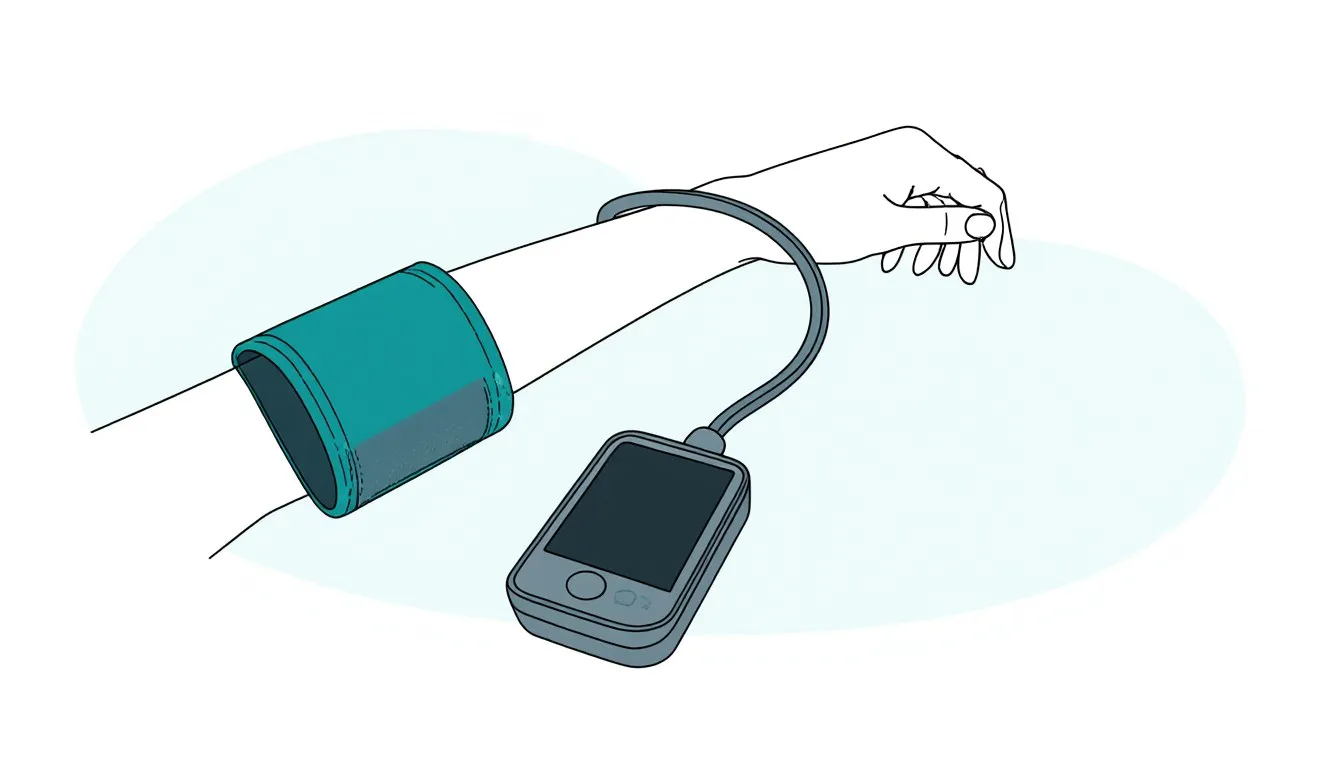
- Home blood pressure monitor displays. A lot of home cuffs, especially the ones with a printer or a companion app, label the top number “SYS” or “SBP” and the bottom one “DIA” or “DBP” right on the screen.
- After-visit summaries and discharge paperwork. If you’ve had a hospital stay or an ER visit, your discharge packet likely logged blood pressure readings throughout your stay, and SBP is how those get labeled in the table.
- Insurance and lab paperwork. Occasionally you’ll spot it on records tied to a physical or a life insurance exam, where blood pressure gets logged alongside cholesterol and other numbers.
It’s clinical shorthand, originally written by staff for staff, that patients started getting handed once after-visit summaries and patient portals became routine. You inherited their abbreviations without the glossary that goes with them.
SBP vs DBP: which number is which?
A standard blood pressure reading is written as two numbers separated by a slash, like 120/80. The top number is SBP, systolic. The bottom number is DBP, diastolic blood pressure, the pressure in your arteries during the moment between heartbeats, when the heart relaxes and refills before its next contraction.
Think of it like squeezing a garden hose. The systolic number is the pressure spike at the moment you clamp down on the hose. The diastolic number is the baseline pressure still sitting in the hose right before you clamp down again. Both numbers matter, but they’re measuring two different moments in the same heartbeat, and that’s why they get tracked separately instead of being averaged into one figure.
While we’re on medical abbreviations, here’s one more worth knowing: HTN. That’s the shorthand clinicians use for hypertension, the diagnosis your doctor makes once a pattern of high SBP and DBP numbers keeps showing up, visit after visit.
What counts as a “normal” SBP number?
The American Heart Association publishes blood pressure categories that most U.S. clinicians use as a reference point, and they’re built around the systolic number as the primary marker:
- Normal: SBP under 120 (with DBP under 80)
- Elevated: SBP between 120 and 129 (with DBP still under 80)
- High blood pressure, stage 1: SBP between 130 and 139, or DBP between 80 and 89
- High blood pressure, stage 2: SBP at 140 or higher, or DBP at 90 or higher
- Hypertensive crisis: SBP over 180 and/or DBP over 120, which needs prompt medical attention
Here’s the honest caveat, and it’s an important one: these are population-level categories built from broad averages, and your own numbers can land differently. Your own doctor may set a different personal target depending on your age, your kidney function, whether you’re managing diabetes, or a dozen other factors that a general chart can’t account for. I’ve talked to enough people whose “high” number was actually right where their cardiologist wanted it, given everything else going on, that I’m wary of anyone treating this table as a pass-fail test. Context from an actual provider who knows your history beats a chart every time.
Why do doctors watch SBP so closely?
Of the two numbers, systolic tends to get the most attention, especially as people get older, and there’s a straightforward reason for that. Your arteries naturally stiffen with age, the way a garden hose left in the sun for twenty summers gets less flexible than a brand-new one. Stiffer arteries can’t absorb the force of each heartbeat as smoothly, so the systolic number tends to climb even when the diastolic number stays put or even drops a little. Clinicians call this pattern isolated systolic hypertension, and it’s common enough in older adults that it’s become one of the main things a routine checkup screens for.
Because SBP is the number most likely to drift upward on its own over the years, it’s also the number most closely tied to long-term cardiovascular risk in research on stroke and heart disease. A pattern of climbing SBP readings across several visits, more than any single high reading, is what doctors want to catch early, well before it turns into a number that lands you in the emergency room.
How do you read your own SBP trend at home?
If you’ve got a home cuff, and honestly they’re one of the more useful cheap gadgets you can own for your own peace of mind, two weeks of consistent numbers gets you two things a single reading never can: a real average, and a sense of whether that average is inching up or holding its ground. Here’s the low-fuss version of doing it right:
- Same time of day, roughly. Blood pressure naturally shifts throughout the day, so morning readings and evening readings aren’t really comparable. Pick a time, morning before coffee is a common one, and stick with it.
- Sit still for five minutes first. Walking in from the car and immediately strapping on the cuff will inflate your number. Sit, feet flat on the floor, arm resting at roughly heart height, for a few minutes before you take the reading.
- Skip caffeine and exercise beforehand. Both temporarily bump your SBP, so a reading taken right after a workout or a second cup of coffee isn’t giving you an honest baseline.
- Take two readings a minute apart and use the average. Cuffs are sensitive to arm position and how snug the fit is, so one number can be noisy. Two in a row smooths that out.
- Write it down. A simple notebook or the notes app on your phone works fine, you don’t need a special log, just a running list of date, time, and both numbers so you and your doctor can see the trend instead of one isolated snapshot.
Watch whether that two-week average is climbing, holding steady, or dropping, since that trend is what’s actually worth caring about. A doctor flipping through a page of consistent home numbers is working with real information. The one reading they catch during your slightly nerve-wracking fifteen minutes in the exam room is a single data point, and a lot of people run a bit high just from being at the doctor’s office. That effect even has a name, white coat hypertension, and it’s real enough that home tracking is often what settles the question.
When should an SBP number prompt a call to your doctor?
This is the part I’d rather be straightforward about than vague. General guidance breaks down roughly like this, though your doctor’s specific instructions for your situation always take priority over any general rule:
- Worth mentioning at your next visit or a routine call: a home average consistently landing in the stage 1 or stage 2 range (130 and up) across several readings, even if you feel completely fine.
- Worth calling sooner rather than waiting: a sudden jump from your usual baseline, or new symptoms alongside a high reading, headache, shortness of breath, or unusual fatigue.
- Seek care right away: an SBP over 180 or a DBP over 120, particularly paired with chest pain, difficulty breathing, vision changes, or trouble speaking. That combination is what’s meant by a hypertensive crisis, and it’s not something to sit on and recheck in an hour.
On the flip side, a low SBP that comes with dizziness, fainting, or blurred vision is also worth a call, even though low readings tend to get less press than high ones. Pair a low reading with dizziness, or a high one with a headache, and that combination is worth acting on today.
Quick answers: SBP FAQs
Is SBP the same thing as hypertension?
No. SBP is just the measurement, the top number in your reading. Hypertension is the diagnosis a doctor makes after seeing that number run consistently high across multiple readings over time. One high SBP reading doesn’t mean you have hypertension any more than one hot day means you live somewhere with a hot climate.
What’s considered a dangerously high SBP?
An SBP over 180 mmHg is generally treated as a hypertensive crisis and warrants prompt medical attention, especially if it comes with symptoms like chest pain or shortness of breath. Below that threshold, what counts as “high” or “concerning” has everything to do with where your numbers sit over several weeks, not what one cuff reading happens to show on a random Tuesday.
Does SBP change throughout the day?
Yes, quite a bit. It’s typically lower overnight, rises in the morning, and shifts with activity, stress, caffeine, and even how full your bladder is at the moment of the reading. That’s exactly why one number caught at a random moment doesn’t tell you much on its own. A two-week average is what actually holds up.
Can stress or anxiety temporarily raise SBP?
It can, yes. A stressful morning, a big work deadline, or simple nerves about being at the doctor’s office can all push your systolic number up for a short window without reflecting your everyday baseline.
Which matters more, SBP or DBP?
Honestly, keep an eye on both, but if you only have the bandwidth for one, make it SBP. It’s the number that tends to creep up as you get older, and it’s the one most closely tied to your risk of stroke and heart trouble down the road. Still, a high DBP on its own is not something to dismiss either.
If SBP was the abbreviation that sent you looking things up today, it’s probably not the last one you’ll run into on a chart or an after-visit summary. Before your next appointment, jot down two readings this week, morning and evening if you can swing it. You don’t need a perfect log or a fancy app, just a few real numbers to hand your doctor instead of a guess. That alone puts you ahead of most people walking in that door.
This is general wellness information, not medical advice. Talk to a healthcare professional about your specific situation.
Maya Ellison
Staff Writer
Maya Ellison writes about living a little better on an ordinary budget and an ordinary schedule: the small, doable changes that actually stick. She is a fan of the 20-minute version of everything and deeply suspicious of any wellness plan that requires a spare $400.