AMS on a Hospital Chart? Here’s What It Actually Means

You’re standing in a hallway outside a hospital room at 11pm, holding a printed discharge summary, and one line stops you cold: “AMS.” No punctuation, no explanation, just three letters wedged between a list of vitals and a medication name. Here’s the short version, so you can breathe before you read the rest of this: AMS stands for altered mental status. It means your person’s usual thinking, awareness, or alertness changed from their baseline. It’s the medical equivalent of a nurse writing “not himself today” in more official-sounding shorthand.
I know that’s a strange thing to feel relief about. AMS means a workup just started: someone flagged a real change, and the team is now chasing down why. Let’s go through what those three letters actually mean, why they show up the way they do, and exactly what to ask so the next chart you see stops feeling like a code you can’t crack.
What does AMS mean on a hospital chart or discharge summary?
AMS is shorthand for altered mental status. You’ll see it in emergency department chart notes, in a discharge summary, sometimes even in the subject line of a nurse’s shift note. It means the patient’s baseline mental function, how alert they normally are, how clearly they normally think, how oriented they normally are to their surroundings, has shifted in some direction.
That shift can go either way. Most people picture AMS as someone who’s suddenly foggy or unresponsive, and that’s a common version of it. But AMS also covers the opposite: someone who’s unusually agitated, restless, or combative compared to how they normally are. An 80-year-old grandmother who’s suddenly quiet and unreachable and a 30-year-old who’s suddenly wired and pulling at his IV lines can both get the same three letters on their chart. The word doing the real work here is “altered.” It’s a change from baseline, whichever direction that change runs.
If you’ve spent any time in a hospital, you’ve probably noticed medical shorthand runs the whole chart, not just the mental status line. It’s worth knowing that a full guide to medical abbreviations can decode everything else you’re staring at, since a chart rarely stops at just one unfamiliar acronym.
Is AMS just a fancy way of saying “confused”?
Mostly, yes, with more precision packed into it. “Confused” is the word you’d use with a friend. AMS is the clinical umbrella that confusion falls under, along with a handful of other states that all count as a change from someone’s normal.
Here’s roughly what falls under that umbrella:
- Confusion or disorientation, not knowing where they are, what day it is, or who’s in the room with them
- Unusual drowsiness, harder to wake up than normal, or drifting off mid-conversation
- Unusual agitation or restlessness, pulling at lines, trying to get out of bed, more irritable than their normal self
- Slowed or slurred speech and thinking, taking much longer to answer simple questions, or answers that don’t track
- Reduced responsiveness, on the more serious end, not reliably responding to voice or touch
The part that trips families up is the word “normal.” That’s why the team asks you what normal looks like for this person, rather than deciding from the bedside alone. It’s a comparison to that specific person’s baseline. A nurse who’s been watching your dad for six hours and notices he suddenly can’t tell them what year it is, when he could an hour ago, that’s the kind of change that earns the three letters. The real question is whether this person seems like themselves right now.
Is AMS a diagnosis, or is it a description of a symptom?
AMS describes what the care team is seeing right now: a change in mental status. Think of it the way a fever works: a temperature reading tells you the body’s running hot, and finding the cause, the flu, an infection, a reaction to a medication, is a separate step the team still has to take. AMS works the same way.
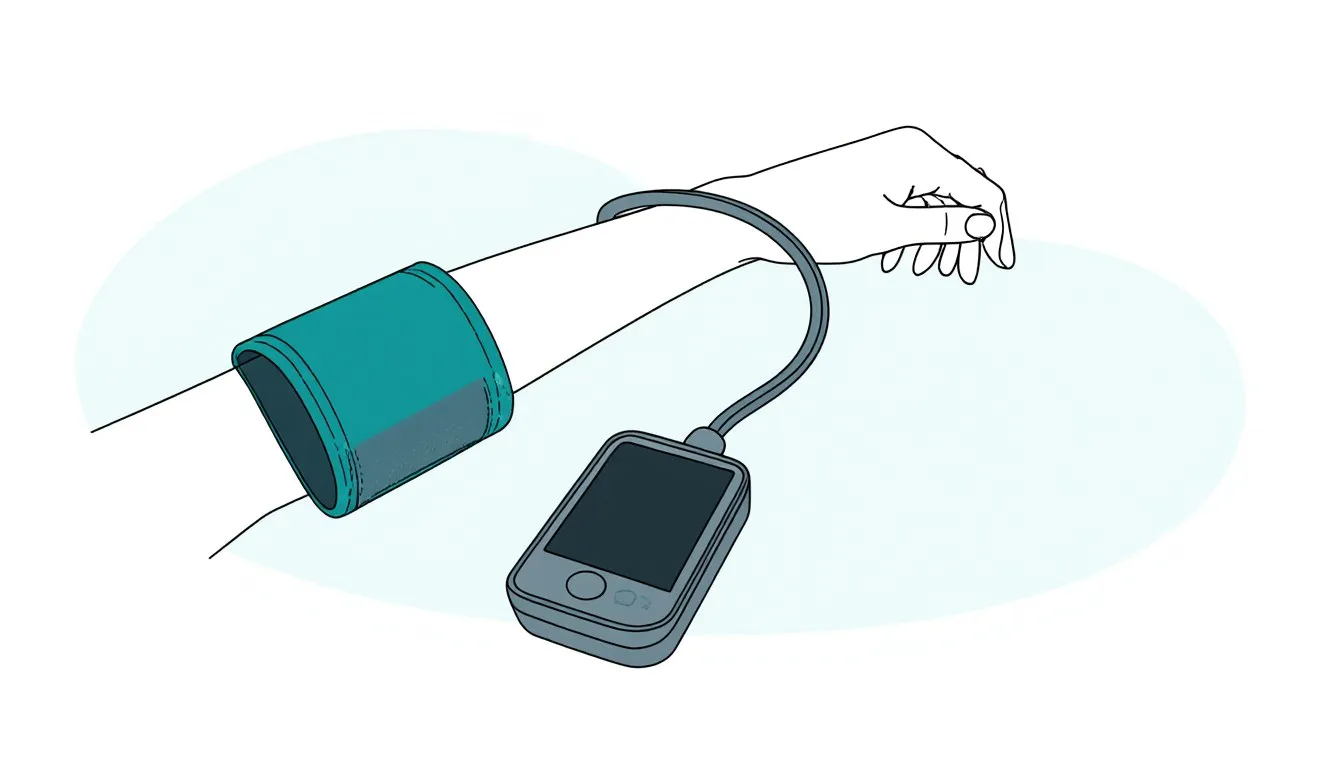
Practically, this means AMS almost never shows up alone on a chart. If you’re the one waiting on a chair outside the room, that workup looks like this: blood draws, maybe a scan, someone combing through the medication list, vitals rechecked because something as ordinary as blood pressure running high or low can be part of the answer too. Ask what’s already been checked, that’s the question worth asking before any other. The team is actively hunting for what’s driving the change while they document that the change exists.
AMS on a chart means someone caught a real change and named it precisely enough for the whole team to act on. For you in that hallway, it means the team already has a lead and is actively running it down. The three letters mark the start of an investigation that’s already underway.
What usually causes altered mental status?
This is the part I wish more people got walked through before they’re standing in that hallway, because the list of usual suspects is long, and most of them are things doctors can identify and treat. Nobody can tell you which one applies to your specific person without an exam, and I’m not going to pretend otherwise. But knowing the general categories makes the waiting room a lot less frightening.
Common categories that show up again and again in AMS workups:
- Infection, especially in older adults, where clinicians have long checked for a urinary tract infection first, since it can cause confusion before it causes any of the symptoms you’d expect
- Low blood sugar (hypoglycemia), which can look strikingly similar to a stroke from the outside and is usually one of the fastest things to check and fix
- Medication reactions or interactions, a new prescription, a dose that’s too high for an older body to clear, or two medications that don’t play well together
- Dehydration or electrolyte imbalance, more common than people expect, especially after illness, heat, or not eating and drinking normally for a stretch
- Alcohol or substance-related causes, including withdrawal, which the team checks for as a standard part of the workup
- More serious causes doctors rule out early, like stroke, seizure, brain injury, or a severe infection spreading through the body, precisely because these need to be caught fast if they’re present
Here’s the thing about that last category: doctors check for the scariest possibilities first and quickest, simply because those are the ones where minutes matter most. That’s why an AMS workup can look intense right out of the gate, a scan here, a blood draw there, before anyone’s told you much of anything. That intensity is careful triage, the team working through the list from most time-sensitive to least.
If the change in mental status came on suddenly, over minutes or a couple of hours, that’s treated differently than a change that crept in over days or weeks. Sudden-onset AMS, especially with slurred speech, one-sided weakness, or a severe headache, is a reason to call emergency services immediately rather than wait for an appointment. That’s not a maybe. Sudden confusion paired with any of those signs is an emergency, full stop.
How do doctors and nurses check for AMS?
It’s less mysterious than it looks from a hospital bed. A lot of it is questions you could ask yourself, plus a couple of standardized tools that let every clinician on the shift compare notes using the same scale.
The most common quick check is an orientation assessment, sometimes charted as “oriented x3” or “oriented x4.” It’s exactly what it sounds like: does the patient know who they are (person), where they are (place), what time period it is (time), and sometimes why they’re there (situation). A nurse asking “Can you tell me your name? Do you know where you are right now? What year is it?” is running the orientation check right there in the doorway.
For a more detailed read, especially after a head injury or a significant change, teams often use the Glasgow Coma Scale. It’s a scoring system that rates three things: eye opening, verbal response, and motor response, each on its own numeric scale, added up into a single score out of 15. A higher number means a more alert, responsive patient. You might hear a nurse say something like “GCS 14” in a handoff, and that’s what they’re referencing, a shorthand for exactly how responsive someone was at that moment, so the next person on shift has a number to compare against instead of a vague impression.
None of this is designed to be a secret. If you ask a nurse what score your person got and what it means, most will walk you through it in plain terms happily. It’s one of those situations, like reading a recipe that just says “reduce until thickened,” where the instruction sounds cryptic until someone tells you what it actually looks like in practice.
What should you ask if you see AMS on a loved one’s chart?
You don’t need medical training to ask good questions here. You need about four, and they’ll get you a plain-language answer faster than trying to decode the chart yourself at 2am.
- “What does AMS mean for my [mom/dad/spouse] specifically, and what’s different from their normal?” This gets you the baseline comparison, which is the whole ballgame.
- “What are you testing for right now, and what have you already ruled out?” This tells you where they are in the workup, not just that a workup is happening.
- “Is this sudden or gradual, as far as you can tell?” The timeline changes both the urgency and the likely cause list.
- “What would you want us to watch for at home if we’re discharged today?” This is the one people forget to ask, and it’s the one that matters most once you’re out the door.
One low-friction habit that helps more than people expect: bring a short written timeline if you can, when did you first notice something was off, what were they like an hour before, did they take any new medication recently. You know their baseline better than anyone on that care team will ever get the chance to. Hand it over even if nobody asks, a five-minute conversation before shift change can save the team an hour of guessing.
Does AMS ever mean something else in medicine?
It does, and it’s worth knowing so you’re not thrown off if you run into it in a different context. AMS is also the standard abbreviation for acute mountain sickness, the altitude-related illness that hits hikers and travelers who ascend too fast, headache, nausea, fatigue, trouble sleeping, usually starting somewhere above 8,000 feet.
The two meanings share three letters and nothing else. If you’ve ever planned a high-altitude trip, you’ve probably seen those same three letters on a packing checklist, right next to advice about drinking more water and climbing slower. That version has its own cause (thinner air, less oxygen) and a treatment path handled entirely through altitude medicine, not anything you’d see on a hospital chart. Chart-note AMS is the altered-mental-status description this whole piece has been about. Context sorts it out immediately: if you’re reading a hospital chart, it’s altered mental status. If you’re reading a trip report from a Kilimanjaro climb, it’s the altitude version. Nobody in an emergency department is going to hand you a chart about mountain sickness unless your person genuinely was hiking at altitude, so in practice the confusion is more of a curiosity than a real risk of mixing the two up.
Quick answers: AMS abbreviation FAQ
What does AMS mean in medical terms?
AMS stands for altered mental status. If it’s on your person’s chart, it means their normal alertness, thinking, or awareness has shifted, in either direction. Maybe they’re foggier than usual, or maybe they’re more wound up and restless than you’ve ever seen them. Both get the same three letters.
Is AMS a diagnosis or a symptom?
AMS describes what’s being observed; finding the reason behind it comes next. Try to hear it as information rather than bad news being hidden from you. If you see AMS on a chart, ask what workup is underway to find the cause. That question tells you far more than the letters alone.
What are the most common causes of AMS?
Infection, low blood sugar, medication reactions, dehydration, and electrolyte imbalances turn up again and again, alongside more serious causes like stroke or seizure that doctors screen for early and fast. If your person is older, ask what the team is checking for and what’s already been ruled out, and let them walk you through the order.
How is AMS measured or assessed?
Mostly with simple questions: does your person know who they are, where they are, and what day it is? For a fuller picture, especially after a head injury, the team may also use the Glasgow Coma Scale. If you hear a number like “GCS 14” in a handoff, just ask the nurse what it means, they’ll tell you in plain terms.
When is AMS a medical emergency?
When it comes on suddenly, over minutes to a couple of hours, especially alongside slurred speech, one-sided weakness, or a severe headache. If you see that combination, call emergency services right away, don’t wait to see if it passes.
Does AMS always mean something serious?
It’s always taken seriously, because the causes range from a treatable infection to something time-critical, and the team can’t tell which without a workup. It’s a wide umbrella, everything from a straightforward urinary tract infection to a medication dose that needs adjusting. Let the letters be your cue to ask questions, your best move in that moment.
AMS on a chart is a flag: it means the team is already digging for the reason your person isn’t quite themselves right now. Next time you see those three letters, ask the care team what’s different from their normal. That one question gets you the rest.
This is general wellness information, not medical advice. Talk to a healthcare professional about your specific situation.
Maya Ellison
Staff Writer
Maya Ellison writes about living a little better on an ordinary budget and an ordinary schedule: the small, doable changes that actually stick. She is a fan of the 20-minute version of everything and deeply suspicious of any wellness plan that requires a spare $400.