What Sage Herb Is Good For: Butter Sauce, Sore Throat Tea, and Honestly Not Much More
That jar of dried sage in the back of your spice rack is good for a short, honest list of things: it makes roasted vegetables and a pan of brown butter taste like something, it makes a cup of tea people have reached for on rough-throat days for generations, and it’s been the centerpiece of traditional cleansing rituals for centuries, even if that’s not the reason it’s in your cabinet. That’s roughly the whole inventory. It is not a superfood, it will not fix your sleep, and no amount of it belongs in a smoothie.
If you’re the kind of person who buys a container of sage every November for stuffing and then finds it, mostly full, the following October, you’re not doing anything wrong. Sage is a one-trick pony in a lot of American kitchens, and that one trick happens once a year. That’s a shame, because it’s cheap, a dollar or two for a jar that’ll outlast several dinners you haven’t planned yet, it keeps well, and it’s a genuinely useful ingredient most of us reach for about once every eleven months instead of every week.
What is sage, and why does everyone have some?
Sage is Salvia officinalis, a soft, silvery-green shrub in the mint family that’s been growing wild around the Mediterranean for a very long time. The leaves are dusty, slightly fuzzy, and smell like a cross between pine and something a little peppery. If you’ve ever run your thumb over a fresh sage leaf and caught that smell on your hand for the rest of the afternoon, you already know it’s a strong one.
Its name comes from the Latin salvere, to save or to heal, which tells you something about how seriously ancient herbalists took it. It’s not a small claim, and it’s part of why sage shows up in old folklore as something closer to a cure-all than a seasoning. We’ll get to what actually holds up later. For now, the plain fact is that it grows easily in dry, sunny, rocky soil, which is exactly the kind of soil you find all over Italy, Greece, and the south of France, and that’s why it became a kitchen staple there long before it crossed the Atlantic.
In the U.S., sage’s reputation has narrowed almost entirely down to one dish: stuffing. Ground sausage, bread cubes, celery, onion, and a heavy hand with dried sage is the flavor a lot of us associate with a specific Thursday in November, and honestly, that’s a fine use of it. But it’s also the reason so many people own sage and use almost none of it. A dish that happens once a year doesn’t empty a jar. I’ve had the same container in my own cabinet outlast two apartment moves, which tells you everything about how rarely most of us reach for it outside of holiday cooking. Sage is basically built for browning in butter, and that’s most of what actually happens on a weeknight stove.
What are the main benefits of sage herb?
The genuine benefits of sage split into three lanes, and it’s worth being upfront that they’re not equally sized. Cooking is where sage earns its keep, hands down. A short list of traditional wellness uses, mainly a throat-soothing tea and an oral-health rinse, is where it’s genuinely useful in a low-stakes, home-remedy kind of way. And a small set of household uses, mostly around scent and some long-standing traditional cleansing practices, round it out.
What sage isn’t is a treatment for anything. You’ll find corners of the internet that push it as a memory cure, a hormone regulator, or a hot-flash fix with the confidence of a prescription label, and that’s overselling a plant that’s mostly been studied in small, early-stage ways. Cooking, you can trust completely. Wellness, you can trust as “worth trying, not worth expecting miracles from.” Household use, you can trust as a nice-smelling extra, not a cleaning product.
If you only take one thing from this article, make it the brown butter sauce two sections down: four ingredients, about ten minutes, and it upgrades plain pasta more than anything else in this article will. Everything else here is a bonus on top of that.
How is sage used in cooking?
This is the part where sage genuinely earns a permanent spot on your grocery list, not just a November one. Fresh sage and dried sage behave differently enough that it’s worth knowing which one you’re holding.
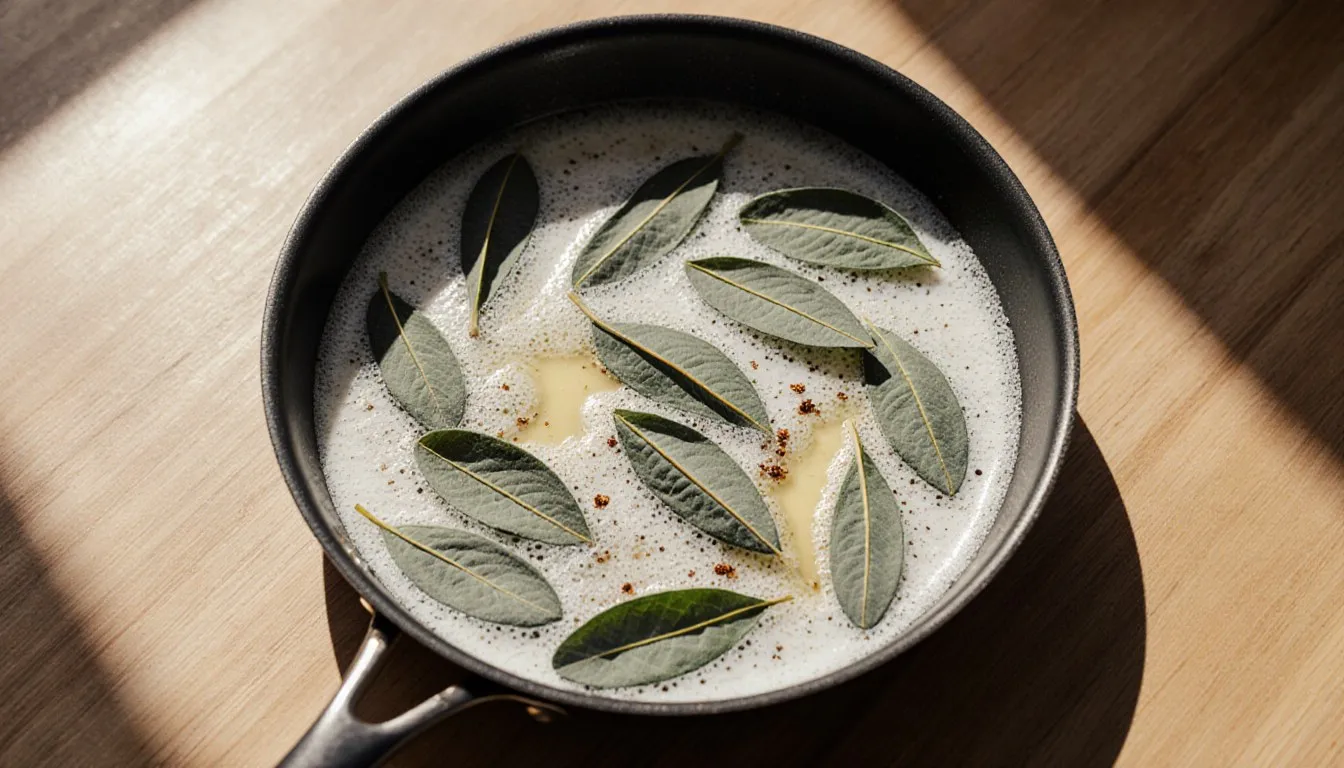
Fresh sage leaves are softer in flavor and turn crisp and almost nutty when you fry them briefly in butter, which is the single best thing you can do with a fresh bunch. Drop whole leaves into melted butter over medium heat for well under a minute, just until they stop sizzling and turn a shade darker, and you’ve got a brown butter sage sauce that makes plain ravioli, roasted squash, or a simple pan of gnocchi taste like a restaurant made it. It’s genuinely one of the easiest fancy-tasting things you can do with four ingredients and ten minutes.
A trick that took me embarrassingly long to catch onto: that same brown butter sage sauce works just as well over a fried or poached egg as it does over pasta, so it’s not only a dinner move. Crack an egg into the pan once the sage leaves have crisped up, cook it sunny-side, and spoon the butter over the yolk when it’s done. Ten minutes, one pan, and it eats like a small, quiet luxury on an ordinary Tuesday morning.
Dried sage is more concentrated and a little dustier in flavor, which is exactly why it works so well rubbed into pork, worked into sausage, or tossed with olive oil over roasting root vegetables, carrots, potatoes, butternut squash, before they go in the oven. It holds up to heat better than a lot of delicate herbs like basil or cilantro, so it’s forgiving if you’re not precise about timing.
If a recipe calls for one and you’ve only got the other, the standard swap is roughly three parts fresh to one part dried by volume: about three teaspoons of chopped fresh sage for every teaspoon of dried. It’s not an exact science, sage is a strong enough flavor that erring a little light and tasting as you go is the safer move, especially with the dried version, which is easy to overdo.
Beyond stuffing and brown butter, sage shows up well in:
- Pan sauces for pork chops or pork tenderloin, where its slightly peppery edge cuts through the richness
- Roasted or sautéed winter squash, sweet potatoes, and mushrooms
- Homemade sausage and meatballs, where it plays the same role as it does in stuffing but on its own
- Brown butter drizzled over simple pastas, gnocchi, or even mashed potatoes
- A quick pan gravy for roast chicken, where a few chopped leaves stirred in at the end keep it from tasting flat
- Herb butters you can freeze in a log and slice off as needed, which is honestly the move if you want sage in rotation without buying fresh bunches every week
What sage doesn’t really do well is bright, fresh applications, raw in a salad, blended into a pesto on its own, tossed into a smoothie. Its flavor is too strong and too savory for that; it wants heat and fat to soften it. If a recipe asks you to use it raw and in quantity, that recipe is unusual enough to double-check before you commit a whole bunch of sage to it.
What wellness benefits does sage offer?
Here’s where we have to be honest about the gap between folklore and evidence, because sage has more folklore attached to it than almost any other kitchen herb, and not all of it holds up equally well.
The one that holds up best, and the one worth actually trying, is a warm cup of sage tea for the days your throat’s had it rough. The traditional version is simple: steep a small handful of fresh leaves or a spoonful of dried sage in hot water for several minutes, then drink it warm, or let it cool slightly and gargle. People have leaned on that home remedy for generations, and for most healthy adults an occasional cup sits in the same low-stakes category as any other herbal tea. Steep it, drink it warm, or gargle with it once it’s cooled, whichever your throat wants that day. It won’t shorten a cold, but a warm, slightly peppery cup of something when your throat hurts is genuinely nice, and that alone is reason enough to make one.
Sage also has a long history in oral care. Traditional practitioners have used sage rinses and sage-infused mouthwashes for mouth and gum irritation for a very long time, and it’s still an ingredient you’ll spot in some natural oral care products today. People who swear by a homemade rinse keep it simple: a cooled, strained sage tea swished around and spit out, no different in method from the throat tea above.
The claim that gets the most hype online, and the one worth being most careful about, is sage and memory or cognitive function. There is early, small-scale research looking at whether sage extract might have a modest, short-term effect on attention or recall in some settings, and that’s a genuinely interesting area. But it’s early research, done with concentrated extracts rather than a cup of tea, and it is nowhere near the kind of evidence that supports calling sage a memory booster or a treatment for cognitive decline. If you see sage marketed as a brain-health supplement, that’s the marketing outrunning the science by a wide margin.
The same caution goes for sage as a fix for hot flashes or menopause symptoms, another place folk tradition and supplement marketing move faster than the research does. Some people report it helps; that’s worth naming honestly as anecdotal, not as an established benefit.
None of this is medical advice, and it’s not a substitute for talking to a doctor or pharmacist about an actual health concern, whether that’s recurring sore throats, gum issues, or anything related to memory or hormones. Sage tea is a nice, low-cost thing to add to your routine. It is not a treatment plan.
Can sage be used around the house?
Past the kitchen, sage has a small but real footprint in the home, mostly around scent.
Burning a few dried sage leaves in a heatproof dish, or simmering sage on the stovetop with a bit of water, citrus peel, and a cinnamon stick, is a simple, cheap way to fill a room with a warm, herbal smell without buying a candle. A small handful of leaves, roughly a tablespoon, is plenty for a stovetop simmer that’ll scent a kitchen for a couple of hours on low heat. It’s the kind of low-effort thing worth doing on a Sunday when the house feels stale and you don’t want to run to the store for anything.
The practice a lot of people have heard of, bundling dried sage into a stick and burning it to “clear” a space, is worth talking about carefully and accurately. That’s smudging, a spiritual and ceremonial practice with deep roots in the traditions of Indigenous peoples of the Americas, and it belongs to the cultures and communities that practice it. It’s also worth knowing that the sage most associated with smudging is white sage, Salvia apiana, a different plant from the culinary garden sage, Salvia officinalis, that’s sitting in your spice jar. They’re related and they look similar, but they’re not the same herb, and white sage has actually faced overharvesting concerns in parts of its native range because of a surge in commercial demand. If a smoky, herbal scent in your home is what you’re after, a simple stovetop simmer with your regular kitchen sage gets you there without wading into a practice that isn’t yours to borrow.
Beyond scent, you’ll sometimes see sage suggested as a natural moth or insect deterrent when dried and tucked into drawers or closets, a use with a long tradition behind it, though it’s more of a mild, pleasant-smelling extra than something that will replace actual pest control if you have a real infestation.
Is sage safe for everyone?
In cooking amounts, sage is about as safe as any herb in your spice rack, which is to say very safe. The caution kicks in with concentrated forms, and it’s worth understanding why.
Sage contains a compound called thujone, the same compound found in wormwood and historically associated with absinthe. In the small quantities you get from cooking with sage or drinking an occasional cup of tea, thujone isn’t something to worry about. It becomes a real concern in concentrated forms: sage essential oil, high-dose supplements, or drinking large amounts of very strong sage tea regularly over time. Thujone in large amounts can affect the nervous system, and it’s the reason sage essential oil in particular should never be taken internally or used undiluted on skin without real guidance.
If you’re pregnant or breastfeeding, the standard, conservative guidance is to avoid concentrated sage, essential oil and supplements especially, and to check with your doctor before making sage tea a regular habit, even though occasional culinary use in food is generally considered fine. This is one of those places where the safe move is genuinely the boring move: ask first.
If you’re managing an ongoing health condition, especially one you take regular medication for, concentrated sage, oils and supplements in particular, is worth a quick conversation with a doctor or pharmacist first. Herb-drug interactions are a real thing even when the herb itself seems harmless, and a professional who knows your specific situation is a better judge of the risk than a spice-rack article can be.
None of this means you need to eye your sausage stuffing with suspicion. Cooking with sage, drinking a cup of sage tea now and then, using it in a mouth rinse, all of that sits comfortably in the low-risk, traditional-use category. The caution is specifically about concentrated extracts, oils, and supplements, and about a short list of situations, pregnancy, seizure disorders, certain medications, where it’s worth a conversation with a doctor or pharmacist before going beyond kitchen amounts.
How do you choose, grow, or store sage?
You’ve got three realistic ways to keep sage on hand, and which one makes sense depends on how often you’ll actually use it, which is worth being honest with yourself about before you buy anything.
A small jar of dried, ground or rubbed sage from the grocery store spice aisle is the cheapest, lowest-commitment option, and it’s genuinely all most people need if sage is a once-or-twice-a-month ingredient rather than a daily one. Dried sage keeps well in a sealed container in a cool, dark cabinet for a long stretch, well over a year if it’s stored properly, though like most dried herbs it gradually loses potency rather than going bad outright. If your jar smells more like dust than like sage when you open it, toss it and grab a new one. It won’t make you sick, old sage just goes quiet.
A fresh bundle from the grocery store produce section is the better choice if you’re planning a specific dish this week, that brown butter sauce, a pork roast, homemade sausage, and it costs more per use than the dried jar but gives you a noticeably softer, greener flavor. Fresh sage wrapped loosely in a damp paper towel and kept in the fridge’s crisper drawer will generally hold up for a week or so. If you end up with more than you’ll use in time, sage is one of the easier herbs to freeze: chop it into softened butter, roll it into a log, and freeze it, and you’ve got pre-portioned herb butter for months.
Growing your own is the option for anyone who cooks with sage often enough to justify a pot on the windowsill, and it’s a genuinely easy plant to keep alive, more forgiving than basil, less fussy than mint about spreading everywhere it’s not wanted. Garden sage generally does well in USDA hardiness zones 5 through 8 as a perennial that comes back year after year, and in colder zones it usually does fine as an annual or in a container you bring indoors for winter. It wants full sun, well-drained soil, and not much water once it’s established; it’s a Mediterranean plant at heart, and overwatering is a much more common way to kill it than underwatering. A young starter plant from a garden center will usually give you enough leaves to cook with within a couple of weeks of planting, and by midsummer, if you planted in spring, you’ll have a full, bushy plant putting out more than you can reasonably keep up with. One plant, given a season to establish, will produce far more sage than a typical household eats in a year, which is either a very good deal or a mild storage problem depending on how you look at it.
Whichever route you go, the real trick to not wasting sage is matching the format to how often you’ll actually cook with it. If you’re a dried-jar-once-a-year household, there’s no shame in that, just don’t feel obligated to also buy fresh bunches you won’t get through. If you’re the kind of household that could plausibly use a sprig a week, a small pot is genuinely the better value over a season than repeatedly buying fresh bundles at the store.
Is sage worth keeping in your kitchen?
Yes. It’s worth keeping around because it’s cheap, it keeps well, it makes a handful of dishes genuinely better with almost no effort, brown butter sauce especially, and it doubles as a pleasant, low-stakes wellness habit in the form of a cup of tea when you want one. That’s a solid return for something that costs a few dollars and takes up one small spot in a cabinet.
What it’s not worth doing is treating sage as a cure for anything or stocking up on concentrated extracts chasing benefits the research hasn’t caught up to yet. Keep your expectations at “useful, pleasant kitchen herb with a nice tea,” and sage will consistently deliver on that.
If you’ve got a half-used jar from last Thanksgiving sitting in your cabinet right now, here’s the one realistic thing to do with it this week: melt a couple tablespoons of butter in a small pan, toss in whatever sage you’ve got, fresh or a spoonful of dried, and pour it over whatever vegetable or pasta you’re already making for dinner. It takes about five minutes and it’s the easiest way to remember why you bought that jar in the first place.
This is general wellness information, not medical advice. Talk to a healthcare professional about your specific situation.
Maya Ellison
Staff Writer
Maya Ellison writes about living a little better on an ordinary budget and an ordinary schedule: the small, doable changes that actually stick. She is a fan of the 20-minute version of everything and deeply suspicious of any wellness plan that requires a spare $400.