Amphibians as Pets: What Frogs, Newts and Salamanders Actually Ask of You
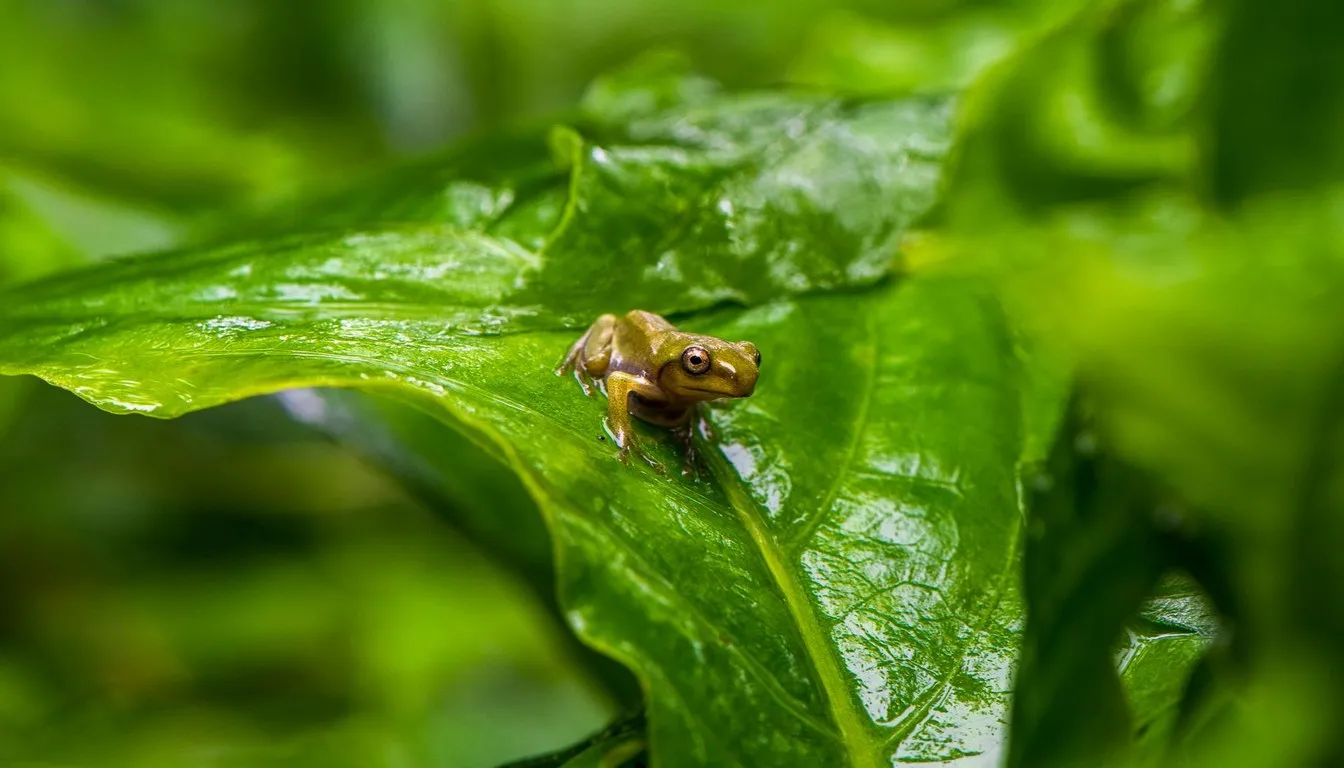
An amphibian drinks and breathes through its skin, which means the water you pour into its enclosure and the air around it go straight into the animal. That single fact decides almost everything about keeping amphibians as pets: no basking lamp will rescue a dry tank, tap water needs treating before it touches the animal, hand lotion is a genuine hazard, and the pet you buy is one you will mostly watch rather than hold. Get the humidity and the water right and a White’s tree frog will sit on the same branch for fifteen years. Get them wrong and you will have a sick animal within weeks, with very little warning in between.
They are wonderful pets for the right person, and the daily load is genuinely small once the enclosure is right: about five minutes of misting morning and evening, feeding on three or four days a week, a two-minute spot-clean most days, and half an hour at the weekend for a water change or a moss top-up. Multiply that by the fifteen years a White’s tree frog can give you and you have the real commitment.
I have kept frogs on and off for most of my adult life, and the ones I remember best were the ones I fussed over least once their enclosure was correct. But amphibians get shelved next to bearded dragons at the pet shop and sold with the same shrug, and that is where new keepers go wrong. A reptile forgives a mediocre setup for a surprisingly long time. An amphibian does not.
What makes an amphibian a different kind of pet than a reptile?
Permeable skin. That is the whole difference, and every other difference falls out of it.
A reptile is sealed in scales. It drinks with its mouth, regulates its temperature by moving between hot and cool spots, and tolerates being picked up by a stranger’s hands. Give a leopard gecko a basking bulb and it will fix its own body temperature. An amphibian has none of that armour. Water, oxygen, and unfortunately whatever else is on the surface it is sitting on all pass through its skin. Many species take in a meaningful share of their oxygen that way, and some salamanders in the lungless family do all of their breathing through skin and the lining of the mouth.
The practical consequences stack up fast:
- Chlorine and chloramine in tap water are harsh on permeable skin and gills. Water for drinking, misting, and soaking gets dechlorinated first, every time.
- Heat lamps that would be standard on a reptile enclosure will dry an amphibian out. Most kept species want room temperature or a touch below, not a hot spot.
- Hands are contaminated by default. Soap residue, hand sanitiser, sunscreen, insect repellent, and the salt and oils of your own skin all cross into an animal that absorbs what it touches.
- Bad husbandry shows up in the skin first, and by the time it does the animal has usually been struggling a while.
The other big difference is temperament. A well-socialised bearded dragon interacts with you. An amphibian, at best, gets used to your presence and stops hiding when you walk past. That is the ceiling on the relationship, and it is worth knowing before you buy rather than after. People who love amphibians love watching an animal live its own life in a small, well-made world. People who wanted a lap pet with legs are usually disappointed by month three.
There is also a housekeeping fact that catches new keepers: amphibian enclosures are wet, and wet enclosures grow things. A dry desert tank you spot-clean weekly is a different chore from a humid tropical tank where uneaten crickets die in the moss and mould blooms on a leftover waxworm. Spot-clean uneaten food within about 24 hours, pull mouldy moss and dead leaves the day you notice them, and strip the substrate back to fresh every two or three months. Miss a fortnight of that and the tank will tell you.
Which amphibians do people actually keep as pets?
The hobby is much narrower than the class. Amphibians run to thousands of species; the ones you will realistically find captive-bred and legal fall into four groups.
Frogs and toads
The biggest group and the one with the widest range of difficulty. At the forgiving end are White’s tree frogs (Litoria caerulea), the fat, placid, permanently smug-looking Australians that tolerate a range of conditions and live well over a decade. Fire-bellied toads are the other classic starter animal: small, active, cheap to feed, and happy in a semi-aquatic setup that is simple to build. Pacman frogs sit in the middle, easy in that they need very little space and eat with enthusiasm, harder in that they are essentially a large mouth attached to a moisture requirement, and they will bite the hand that feeds them.
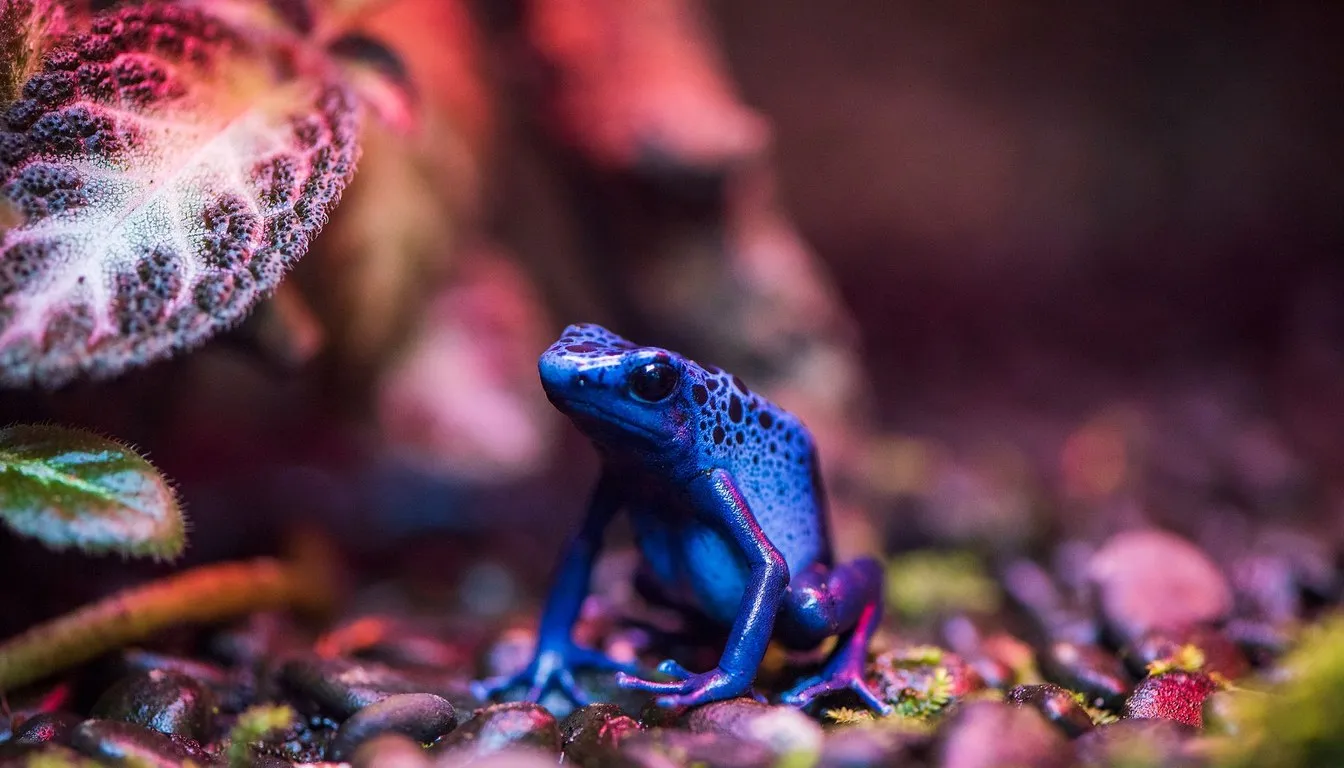
Then there are the ones that get bought on looks. Poison dart frogs are stunning, small, active in daylight, and much more demanding than their price tag suggests: they need a stable, planted, precisely humid vivarium and a rolling supply of fruit flies or springtails you culture yourself. Captive-bred darts are not dangerous, since their toxicity comes from a wild diet they never get in captivity, but they are not a first amphibian. African clawed frogs and African dwarf frogs are fully aquatic and often sold as fish tank novelties, which is how the clawed frog, a big, long-lived, messy animal, ends up in a five-gallon that cannot cope with it.
Salamanders
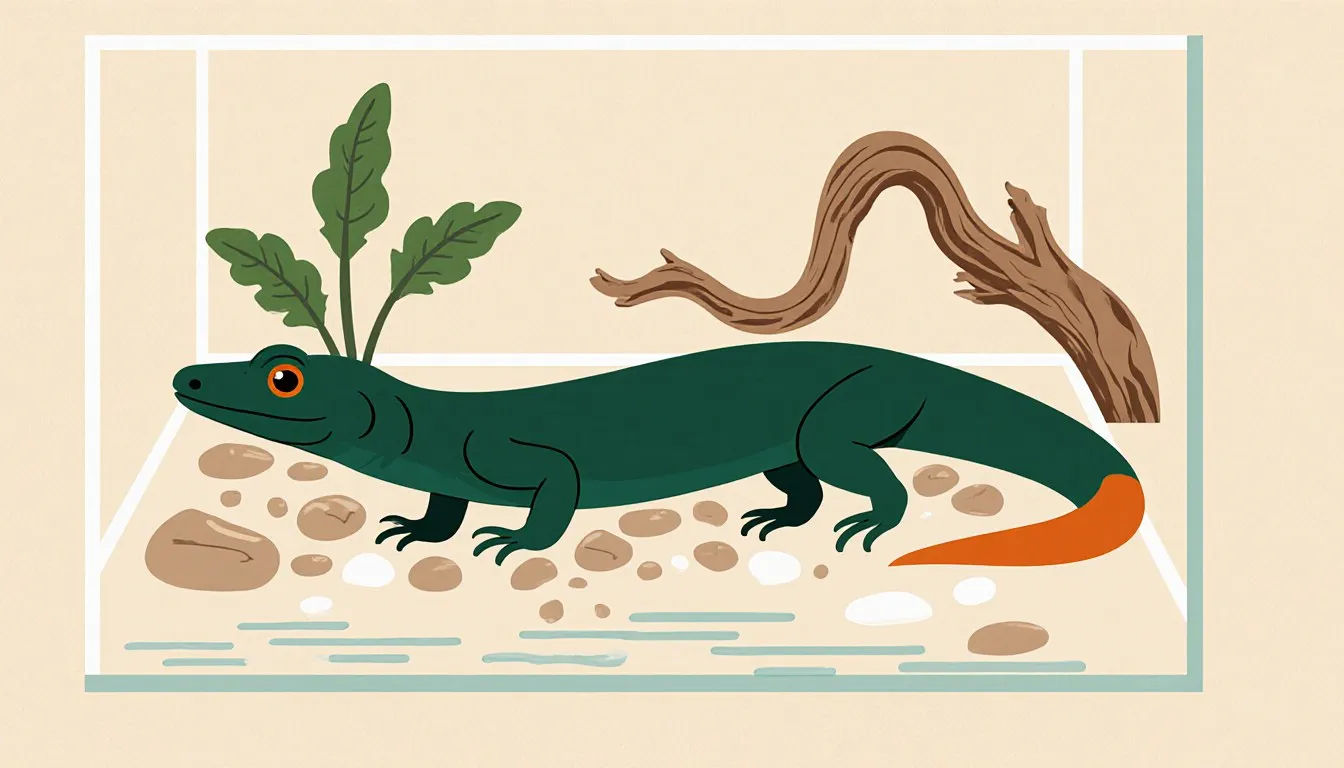
Terrestrial and secretive. Tiger salamanders are the ones most people meet, thick-bodied, surprisingly long-lived, and burrowers by nature, which means a deep substrate and a keeper who accepts that the animal is underground most of the day. Fire salamanders are the handsome black-and-yellow European species, cool-loving to the point that a warm room is a real problem for them. Both suit a keeper who is happy with a tank that occasionally looks empty. If you want the fuller picture on species choice, enclosure depth and feeding routine, salamanders as pets goes into it properly.
Newts
Newts are salamanders that spend most of their adult lives in or near water, and the kept species are mostly small, cool-water animals: eastern newts, paddle-tail newts, and the various fire-bellied newts that show up in shops with alarming inconsistency about which species is actually in the tub. They need clean, cool, filtered water and a way to get out of it, and they are famous escape artists. A gap you would not think twice about is a gap a newt will find at two in the morning. There is a deeper guide to newts as pets covering water parameters and the land-versus-water balance, and a separate look at giant newts as pets for anyone eyeing the larger species.
Axolotls
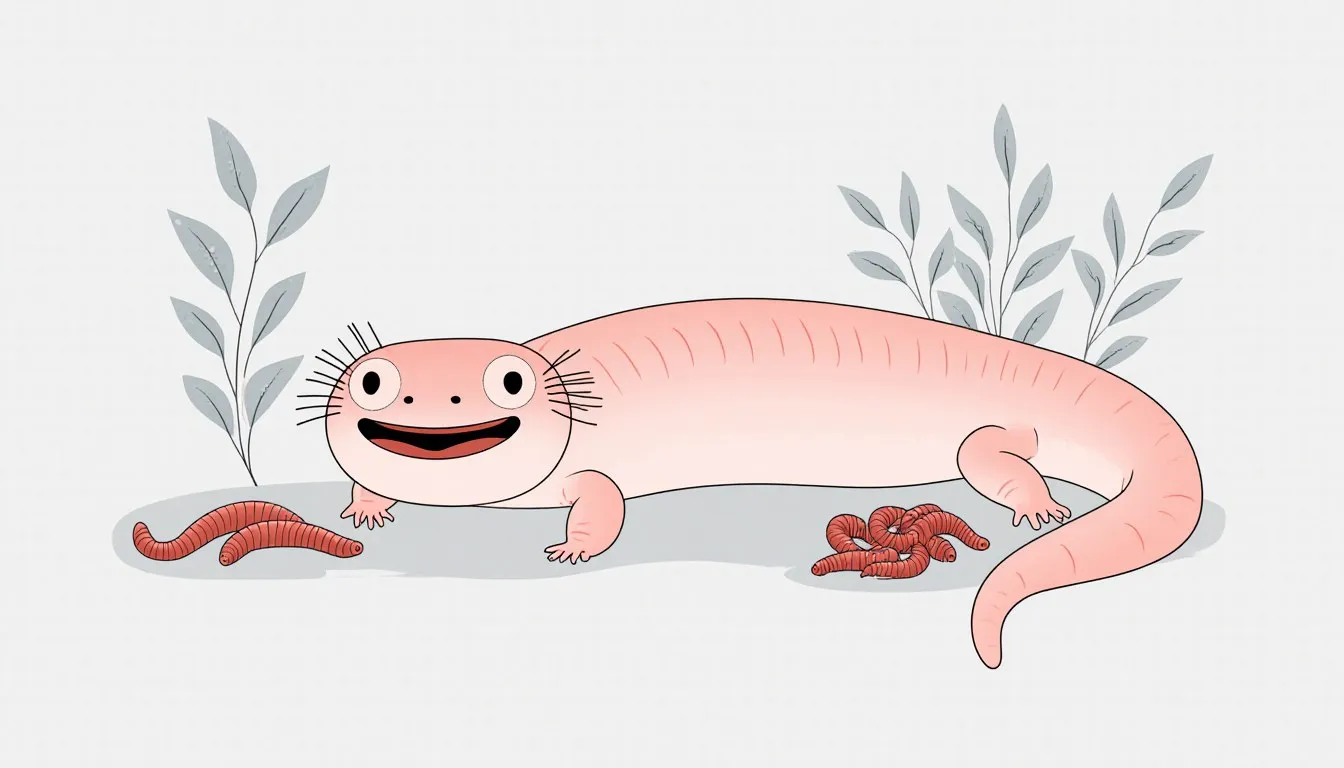
The axolotl (Ambystoma mexicanum) has become the face of amphibian keeping, and it deserves a group of its own because it lives its entire life in an aquarium. It is a Mexican salamander that never leaves its larval form: permanently aquatic, permanently gilled, and permanently in need of cold, clean, gently filtered water. Cool is the hard part. Axolotls are stressed by warm water, and a summer heatwave in a house without air conditioning is the single most common way pet axolotls get into trouble. They are also the one amphibian on this list that reliably takes a prepared food, which makes the shopping easier; the specifics of pellets, worms and feeding schedule are covered in the guide to feeding an axolotl.
One sourcing note that applies to every group above: buy captive-bred. Wild-caught amphibians arrive stressed, often carrying parasites, and the international trade in them has helped spread chytrid fungus (Bd), the skin pathogen behind catastrophic amphibian declines worldwide. Captive-bred animals are healthier, better adjusted to captivity, and do not take anything out of a wild population that is already under pressure. A seller who cannot tell you where an animal came from is telling you something.
Are amphibians good pets for beginners?
Some are genuinely forgiving. Most of the popular ones are not, and the gap between those two groups is wider than the shop shelf suggests.
The honestly beginner-friendly list is short:
- White’s tree frog: tolerant of a range of humidity and temperature, eats readily, hardy, and calm enough that the occasional necessary handling is not a crisis. The best first amphibian for most people, and the one I would hand a nervous new keeper without hesitation.
- Fire-bellied toad: small, cheap to house, active during the day, and forgiving of a semi-aquatic setup that is merely decent rather than perfect. They are also chatty in a low-key way, which people either enjoy or find surprising at 6am.
- Pacman frog: a good first amphibian for someone with limited space, with one caveat: they need consistent moisture and will burrow and go quiet for long stretches. Do not buy one expecting activity.
The ones I would steer a first-timer away from:
- Poison dart frogs: the live-food logistics alone rule them out. You will be maintaining fruit fly cultures on a schedule for the animal’s whole life, and a planted vivarium that holds stable humidity takes some practice to build.
- Aquatic newts: hardy enough animals in themselves, but you are running an aquarium with an escape-prone animal in it, and cool water in a warm room is harder than it sounds. Newts are for someone who has kept fish before.
- Axolotls: genuinely rewarding, genuinely popular, and genuinely demanding, mostly because of temperature. If your house gets warm in summer, budget for a chiller or a fan setup before you budget for the animal.
- Anything wild-caught, anything you cannot identify, and anything sold as a “starter” in a container smaller than a shoebox.
The general rule I use: an amphibian is a good beginner pet if the enclosure can be built correctly once and then maintained on a weekly routine. It is a poor beginner pet if the enclosure needs continuous adjustment, if the food needs culturing, or if the temperature depends on the weather. Every animal on the “not for beginners” list fails one of those three tests.
Amphibians in general, though, are underrated. They are quiet, they cost little to feed, they take up modest space, they do not need daily exercise, and a well-planted amphibian enclosure is one of the nicest things you can have in a room. The trade is that you are keeping the enclosure as much as the animal.
What does an amphibian enclosure need?
Four things: the right moisture, the right substrate, the right water, and the right temperature. Everything else is decoration, and decoration matters mostly because it gives the animal somewhere to hide.
Sizes first, as minimums for one adult. A White’s tree frog wants 18 by 18 by 24 inches, roughly 30 gallons of tall terrarium, and a pair can share that footprint. A Pacman frog needs 12 by 12 by 12 inches, floor area rather than height. A tiger salamander wants 24 by 18 by 18 inches with room for a deep substrate. A single axolotl needs 20 gallons of water with a 36 by 18 inch footprint, and a pair of small newts 10 gallons with a good deal of the surface given over to land. Dart frogs are kept at 18 by 18 by 18 inches per pair, planted. Go larger wherever you can afford the space: a bigger volume holds its temperature and humidity far steadier than a small one, and steadiness is the whole game here.
Humidity and ventilation
Most terrestrial and arboreal amphibians want high humidity with airflow, which sounds contradictory and is the main thing new keepers get wrong. A sealed plastic tub holds humidity beautifully and turns stale and mouldy within a week. Front-opening glass terrariums with mesh tops and vents let you mist to raise humidity and let the air turn over between mistings. Aim for 50 to 70 percent relative humidity for a White’s tree frog, 60 to 80 percent for most tropical frogs and terrestrial salamanders, and 80 to 100 percent for dart frogs, read at animal level rather than at the lid. Build it as a gradient: a damp end with deep moss and a drier end with a hide, so the animal chooses.
Buy a hygrometer and a thermometer, both digital, both placed at animal level rather than at the top of the tank where nobody lives. Analogue dial hygrometers are close to useless. Misting once or twice a day is standard for tropical species; a small automatic mister is a reasonable investment if your schedule is unreliable.
Substrate
Coconut fibre, sphagnum moss, cypress mulch, or a bioactive soil mix, depending on the species. What matters is that it holds moisture without going swampy, and that it cannot be swallowed to any harmful degree. Gravel and small bark chips are the classic mistake with terrestrial frogs that lunge at food and take a mouthful of substrate with it; large-particle or fine-particle, not the in-between. Burrowers like tiger salamanders need four to six inches of loose substrate, and a Pacman frog wants three to four inches it can sink into up to the eyes, or they will spend their lives trying to dig into a floor that will not give.
Bioactive setups, live plants over a drainage layer with springtails and isopods working as clean-up crew, are worth the extra effort for humid tropical species. They stabilise humidity, deal with waste, and look far better than a tub of damp coir. They also take a few weeks to establish, so build the enclosure before you buy the animal.
Water
Every amphibian needs a water dish shallow enough to sit in without swimming, wide enough to hold the whole animal, and emptied and refilled daily. Aquatic species need a real aquarium at the volumes above, fully cycled before the animal goes near it. Dechlorinate everything. For aquatic setups (axolotls, newts, clawed frogs), you are running a real fish tank: cycled filter, gentle flow, regular partial water changes, and a test kit so ammonia and nitrite stay at zero. Amphibians are more sensitive to poor water than most fish, and “the water looks clean” is not a measurement.
Paludariums, half land and half water, suit fire-bellied toads and semi-aquatic newts and are deeply satisfying to build, but they are the harder version of both a terrarium and an aquarium at once. Start with one or the other.
Temperature and light
Most commonly kept amphibians do well somewhere in the upper 60s to mid 70s Fahrenheit, roughly 18 to 24 Celsius, which is normal indoor room temperature in a lot of homes. Cool-preference species, fire salamanders, axolotls, many newts, want the lower end or below it, and heat is more dangerous to them than cold. Under-tank heaters and heat lamps are usually unnecessary and often harmful. If your problem is a room that gets too warm, the fix is a fan, a chiller, or a cooler room, not a thermostat set lower on a device that only adds heat.
Lighting is for you and for live plants, plus a day-night cycle for the animal. There is ongoing discussion in the hobby about low-level UVB for some diurnal species, and dart frog and White’s keepers increasingly run a weak UVB source; if you do, it goes over a mesh top with plenty of shade available, never as a basking arrangement.
What do pet amphibians eat?
Live invertebrates, mostly, and this is the requirement that ends the conversation for a fair number of prospective keepers. If a tub of crickets in your kitchen is a dealbreaker, an amphibian is not your pet.
The standard staples are crickets, dubia roaches, earthworms, and various worms and larvae used as treats. Crickets are the default because they are available everywhere; they are also noisy, smelly, prone to escaping, and they die in your enclosure if uneaten. Dubia roaches are quieter, cleaner, and more nutritious, with the obvious social drawback. Earthworms are excellent food for salamanders, newts and larger frogs, and are the easiest thing on the list to source and store. Waxworms are fatty enough that once or twice a week is the ceiling, on top of the staples. The very small species eat very small food: fruit flies and springtails, cultured at home on a rolling schedule.
Two things matter as much as the insect itself:
- Gut-loading: feed the feeders a good diet for a day or two before they go in the tank. A cricket kept in a bare tub is a poor meal.
- Dusting: a calcium and vitamin supplement dusted onto feeder insects at the frequency your species needs. Insect-only diets are short on calcium, and when exotics vets see metabolic bone problems in a captive amphibian, the history they usually find is a keeper who skipped the dust.
Axolotls are the outlier: they take earthworms and prepared sinking pellets happily, which makes them the one group you can feed without a live insect colony. The specifics of what and how often live in the guide to feeding an axolotl. If you want the detail on what goes into a tree frog or a salamander, what do tree frogs eat and what do salamanders eat each cover their species properly.
A practical note nobody warns you about: appetite is your best daily health signal, so it pays to feed in a way that lets you actually see it happen. Tong-feeding, or feeding in a set spot at a set time, tells you within a day or two when something has changed. Scatter-feeding crickets into a planted tank tells you nothing except that the crickets are gone, and crickets can leave for reasons of their own.
Can you handle a pet amphibian?
Rarely, and briefly, and only when there is a reason. Handling is not part of the deal with amphibians, and a keeper who wants a pet to hold should get a corn snake or a bearded dragon instead.
The skin explains it again. Everything on your hands crosses into the animal: soap residue, sanitiser, lotion, sunscreen, cigarette residue, the salt in your own sweat. The animal’s protective mucus layer is easily damaged by dry hands, and a damaged mucus layer is an open door for infection. Handling is also stressful for an animal whose entire survival strategy is not being noticed. Some species will thrash and bolt, and small amphibians are injured surprisingly easily by a short fall onto a hard floor.
When you genuinely must move one, for an enclosure deep clean, a move, or a trip to the vet, the process is:
- Wash your hands thoroughly with plain water, no soap left on the skin, and rinse well.
- Wear powder-free nitrile gloves rinsed under dechlorinated water, or at minimum wet your bare hands with dechlorinated water first.
- Support the animal fully, keep it low over a soft surface, and keep the whole thing short.
- Better still, do not pick it up at all. Cup it into a small container and move the container.
Axolotls get a specific warning: their bodies are cartilaginous and their gills are delicate, and they should be netted or cupped in water rather than lifted out of it. Toads, meanwhile, produce skin secretions of their own that irritate eyes, mouths and broken skin, fire-bellied toads especially. Wash your hands promptly after any contact, keep them away from your face until you have, and treat toads as strictly no-touch for children.
The upside of a look-don’t-touch pet is that a well-built enclosure becomes the entertainment. Watch a White’s tree frog wake up at dusk and reposition itself for the evening, or a fire-bellied toad patrol the shallows, and you get a lot more out of the animal than you would from holding it for two anxious minutes.
How long do amphibians live, and what does keeping one cost?
Longer than people expect, and the setup will cost you several times what the animal does.
Lifespans vary a lot by species, but the commonly kept ones are not short-term pets. White’s tree frogs commonly live well past a decade in good conditions, and long-lived individuals have gone considerably further. Axolotls are typically kept for something in the ten-to-fifteen-year range. Tiger salamanders are among the longest-lived amphibians in the hobby and can outlast a family dog by a wide margin. Fire-bellied toads and newts, small as they are, routinely run into their teens. Even a Pacman frog, sold for the price of a takeaway, is a multi-year animal.
Take that seriously before you buy. A child who wants a frog at nine may be at university before that frog dies, and it will be someone’s job to mist the tank in the meantime. Amphibians end up in rescue for exactly this reason far more often than they end up there through illness.
Time is the other recurring cost, and it is the one that actually puts animals into rescue. Reckon on five minutes of misting twice a day for a tropical land setup, feeding sessions on three or four days a week (daily for young animals, once or twice weekly for an adult Pacman frog or axolotl), ten minutes of spot-cleaning every couple of days, and thirty to sixty minutes at the weekend for a 20 to 25 percent water change on an aquatic tank or a substrate and moss refresh on a land one. Add a full teardown clean two or three times a year, and a fortnight of hunting for a sitter every time you want a holiday. On money, I am not going to invent numbers, because prices move and vary hugely by country and species. What is reliably true is the shape of the spending:
- The animal is usually the cheapest line item. Common captive-bred species cost a fraction of what their housing does. Rarer morphs and dart frogs are the exception.
- The enclosure is the big one. A front-opening glass terrarium, substrate, hides, plants, a mister or fogger, thermometer and hygrometer, and, for aquatic species, a filter and possibly a chiller. Building bioactive costs more up front and less over time.
- Live food is the recurring bill. Modest for a single fire-bellied toad, noticeable for a group of dart frogs on cultured fruit flies, and it never stops. Supplements are cheap and non-negotiable.
- Electricity, water treatment, and replacement substrate are small but continuous.
- Vet care is the unpredictable one. Exotics vets are not on every high street, and an amphibian consult often costs more than a cat one. Find out before you need one whether there is a vet within reach who sees amphibians. A lot of general practices politely do not.
The factors that actually move your total: species (an axolotl in a warm climate is a much more expensive animal than a fire-bellied toad in a cool one), tank size, whether you need cooling, and whether you culture your own feeders or buy them weekly. Cooling equipment is the line item people forget, and it is the one that turns a cheap pet into an expensive one.
Which amphibian fits your home?
Work backwards from your space, your climate, and your tolerance for a pet that ignores you.
The comparison below covers the four routes most people are choosing between.
- Tree frogs. Vertical space rather than floor space: a tall terrarium with sturdy branches and broad leaves. Nocturnal, and the males of most species call, sometimes loudly, sometimes at 3am. Best for a keeper who wants a visible, characterful animal and has somewhere to put a tall tank that is not the bedroom. White’s are the tolerant option; the smaller, more delicate species are a step up. There is a fuller treatment of tree frogs as pets, and green tree frog facts if that particular species is the one you have your eye on.
- Newts. Horizontal space, water quality, and a tight-fitting lid. Quiet, undemanding on space, and often visible during the day, which counts for a lot. Best for someone who has kept a fish tank and lives somewhere that does not roast in July. The dedicated guide to newts as pets covers the water side properly, and if you are drawn to the larger species, giant newts as pets is where the space and filtration questions get worked through.
- Salamanders. Floor space and substrate depth, low light, cool temperatures, and near-total silence. The most hands-off of the group and often the least visible; a tiger salamander may be underground for days. Best for a patient keeper who enjoys a naturalistic setup for its own sake. The detail is in salamanders as pets.
- Axolotls. Twenty gallons of cold water for one adult, gentle filtration, and a plan for July. Silent, fully visible, and the most engaging to watch of the four, since they are permanently out in the open. Best for someone with aquarium experience and a house that stays cool, or the budget to make one room stay cool.
A few home-specific filters worth applying honestly:
- If your home gets hot in summer: rule out axolotls, fire salamanders, and most newts unless you are committing to cooling. Look at White’s tree frogs or Pacman frogs.
- If noise matters: avoid calling tree frogs. Salamanders, newts and axolotls are silent, and fire-bellied toads are only quietly vocal.
- If space is tight: a Pacman frog or a pair of fire-bellied toads need surprisingly little. A tiger salamander or an axolotl needs a real tank.
- If this is a child’s pet: pick the animal on the assumption that you, the adult, will be doing the misting, the feeding, and the water changes for the next decade. Plenty of nine-year-olds keep helping for years; plan the tank around the ones who do not.
And if you want to name whatever you end up with, pet frog names is a more entertaining rabbit hole than it has any right to be.
When does a pet amphibian need a vet?
Amphibians hide illness well, and by the time something is obvious it has usually been developing for a while. I am a keeper, not a veterinarian, and nothing here is a substitute for one. What follows is the list of signs that mean stop adjusting things yourself and book an appointment.
Call an exotics vet when you see:
- Skin lesions, sores, discolouration, or excessive shedding. Red patches on the belly and legs, cloudy or greyish film, or open wounds. Skin problems are urgent in an animal that breathes through its skin.
- Refusal to eat beyond what is normal for the species and season, particularly with visible weight loss around the hips and spine.
- Lethargy, or an animal sitting out in the open when it would normally hide. That behaviour change is often the earliest signal you get.
- Bloating, swelling, or fluid buildup in the abdomen or limbs.
- Gasping at the surface, laboured movement, or loss of balance.
- Curled toes, a soft or deformed jaw, or trembling, which point to a diet and supplementation problem that needs professional assessment.
- Gill changes in an axolotl: shrivelling, forward-curling, or pale gills are most often a water-quality signal. Test the water the same day, and treat the change as urgent either way.
- An animal that has swallowed substrate, or any injury from a fall or a tankmate.
What to bring to the appointment matters as much as getting there. Take your actual numbers: current temperature and humidity readings, water test results if the animal is aquatic, your dechlorination routine, what you feed and how often, what supplement you dust with and how frequently, when the enclosure was last cleaned and what you cleaned it with, how long the animal has been in your care, and where it came from. Most amphibian illness starts as a husbandry problem, and a vet who can see your husbandry gets to the answer far faster than one who has to guess at it. Photograph the enclosure on your phone before you leave.
Do not medicate an amphibian yourself. Products sold for fish, reptiles, or humans are not interchangeable, and an animal that absorbs everything through its skin has essentially no margin for a wrong dose. Find an exotics vet before you have an emergency, because searching for one at 9pm on a Sunday with a sick frog is a bad experience I would not wish on anyone.
Amphibian pet FAQs
Is it legal to keep amphibians as pets?
Usually, but with real exceptions that vary by country, state, and even city. Some jurisdictions restrict or ban specific species outright: African clawed frogs and axolotls are prohibited in various places because of invasive-species or conservation rules, and native amphibians are commonly protected, meaning you cannot legally take a newt or salamander out of your local pond. Some places require permits for particular species. Check your local wildlife authority before you buy, not after, and buy captive-bred from a seller who can tell you what the animal actually is.
Do pet amphibians smell?
A well-maintained enclosure smells like damp earth, which most people find pleasant. A neglected one smells like a stagnant pond, and quickly. The smell almost always comes from the enclosure rather than the animal: uneaten food rotting in the substrate, waste that has not been spot-cleaned, or water that needs changing. Crickets smell worse than any amphibian I have kept. If a tank starts to smell, treat it as a husbandry alarm rather than an air-freshener problem.
Are amphibians good pets for kids?
They are good pets for a household with kids, provided an adult owns the care. They are not good pets for a child to be solely responsible for. The no-handling rule frustrates most young children, the maintenance is precise, and the lifespan outlasts the average childhood enthusiasm. A White’s tree frog or a fire-bellied toad in a well-built tank is enriching for a curious kid who is happy to watch and help. Any amphibian bought on the promise that the child will look after it is an animal you have just agreed to look after.
Tank or terrarium: what is the difference?
A terrarium is a land setup with a mesh top, front-opening doors and a substrate that holds moisture, and it is what most frogs, toads and salamanders need. A tank in the aquarium sense is a water setup with a filter, and it is what axolotls, clawed frogs and largely aquatic newts need. A paludarium splits the difference with a water section and a land section, and it suits fire-bellied toads and semi-aquatic newts. The practical difference for a buyer: standard fish tanks have open tops and lose humidity fast, so if you are keeping a land species, a front-opening terrarium will save you a lot of misting and a lot of frustration.
Can you keep different amphibians together?
As a rule, no. Mixed-species enclosures look appealing and cause problems: different humidity and temperature needs, size mismatches that end with the larger animal eating the smaller one, and the risk of passing pathogens between species that never meet in the wild. Some species can be kept in groups of their own kind, and some, including many salamanders and Pacman frogs, cannot even manage that. Keep one species per enclosure, and research whether that species tolerates company at all before you buy a second one.
Who these animals actually suit
An amphibian suits the person who enjoys building and maintaining a small, working habitat, and who takes their satisfaction from watching an animal get on with its own life behind glass. If you want a pet you can hold, this is the wrong class of animal. If you find yourself checking the hygrometer twice a day for the first month and reorganising the branches because the frog seems to prefer the left side, you are exactly the right keeper.
Start with a White’s tree frog or a pair of fire-bellied toads, buy captive-bred, build the enclosure a few weeks before the animal arrives, and get the humidity and water sorted before anything else. Do that and you have a quiet, low-cost, genuinely interesting animal that will probably still be with you in ten years. Skip it, and you will learn how quickly permeable skin turns a small mistake into a sick animal.